

More than a quarter of the government’s budgeted economic programs saw no progress during the first half of fiscal year 2025/26, highlighting sluggish capital expenditure and weak project implementation.
A budget implementation report released by the Confederation of Nepalese Industries (CNI) reveals that 27 percent of programs under economic sectors remained untouched as of mid-January. Of the 74 budget headings in these sectors, only nine were fully executed, while 45 showed partial progress during the review period.
Performance in the energy, infrastructure, and urban development sectors was similarly underwhelming. Among 14 programs launched in these areas, just three were fully implemented, eight recorded partial progress, and three saw no advancement at all.
The findings come amid persistently low capital spending. Between mid-July 2025 and mid-January 2026, the government utilized only 11.66 percent of the allocated Rs 407.89 billion capital budget.
Ram Krishna Khatiwada, chairman of CNI’s Infrastructure Committee, emphasized that private investment is closely tied to government spending. “For every Re 1 invested by the government, the private sector invests around four rupees. However, entrepreneurs hesitate to invest when government capital injection remains low,” he said at a program in Kathmandu.
Government officials have acknowledged structural weaknesses in budget planning. Keshav Kumar Sharma, secretary at the Ministry of Physical Infrastructure and Transport, cited inadequate project preparation as a major reason for poor capital spending.
“Every year, the government struggles to fully utilize allocated funds. Even projects listed in the project bank often lack sufficient groundwork,” Sharma said.
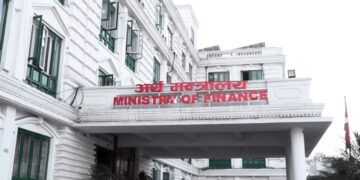
Last year, the Ministry of Finance instructed government agencies to propose only those projects included in the National Planning Commission’s project bank, requiring detailed preparation and cost-benefit analysis.
However, this guideline was not strictly followed while drafting the current fiscal year’s budget. Consequently, several small and low-impact projects received funding allocations, many of which were later scrapped by the government formed after the Gen Z movement.