
CEO Tab
  • Home
  • Prime News
  • International Market
  • Special Report
  • Corporate
  • Opinion
  • Next Gen
  • Entertainment
No Result
View All Result
CEO Tab
  • Home
  • Prime News
  • International Market
  • Special Report
  • Corporate
  • Opinion
  • Next Gen
  • Entertainment
No Result
View All Result
CEO Tab
No Result
View All Result
Home Prime News

Nepal and Bangladesh finalize preparations to sign 40 MW power purchase-sale agreement

CEO Tab by CEO Tab
July 11, 2024
in Prime News
0
Chitwan industries feeling heat due to irregular power supply
74
SHARES
1.2k
VIEWS
Share on FacebookShare on Twitter

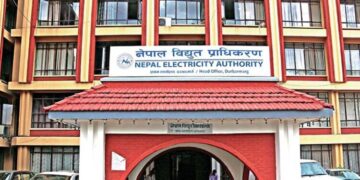
The Bangladesh Power Development Board (BPDB) has sent a correspondence to the Nepal Electricity Authority (NEA) to enter into a formal agreement for the purchase and sale of 40 megawatts of electricity produced in Nepal. The letter sent on Monday confirmed that the bid submitted by the NEA for the sale of 40 MW of electricity for the 6-month monsoon period has been accepted by the relevant authorities.

You might also like

Nepal Emerges as a Regional Power Exporter, Selling Up to 650 MW of Electricity Daily

Authorities Intensify Investigation into High-Value Stock Brokerage Firms

NRB Tightens Rules on Interest Capitalization for Long-Term Project Loans

According to the provisions of the law, BPDB called for tenders on January 1, 2024, for the purchase of 40 megawatts of electricity produced in Nepal for a period of five years, in accordance with the tripartite agreement between entities in Bangladesh, India, and Nepal. The NEA had submitted the tender document with the electricity price in the prescribed format. BPDB evaluated the bid documents and informed the NEA of their acceptance.

The NEA must give a written notice of acceptance to BPDB within 7 working days. Following this, BPDB will provide the draft power sale agreement to the NEA, and the agreement should be finalized within 28 days of receiving the draft. This will be a tripartite agreement between the NEA, NTPC Vidyut Vyapar Nigam (NVVN) of India, and BPDB.

Kulman Ghising, managing director of the NEA, stated that all remaining processes are being completed to export electricity to Bangladesh this rainy season. “The draft of the tripartite electricity sales agreement has been agreed upon by all three parties, so the agreement will be finalized soon. After that, we will send the list of projects to the Central Electricity Authority of India for approval to export electricity to Bangladesh. Since it takes time to get approval for new projects, we will send a proposal for approval to export electricity to Bangladesh from the projects that have already received export approval in India,” he said.

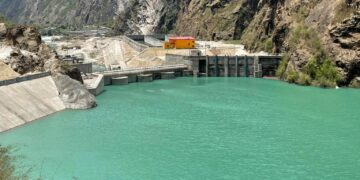
The NEA plans to export electricity produced by the 25 MW Trishuli and 22 MW Chilime hydropower projects, which were built with an Indian grant and are owned by it, to Bangladesh. Both these projects have received approval for electricity export in India.

NEA to receive 6.40 US cents per unit, electricity to be sold for five years

The NEA will sell 40 megawatts of electricity to Bangladesh for the 6 months of the rainy season, i.e., from June 15 to November 15, every year for five years. The NEA will receive a fee of 6.40 US cents per unit from the sale of electricity to Bangladesh.

The electricity exported to Bangladesh will be transmitted through the first international Dhalkebar-Muzaffarpur 400 kV transmission line between Nepal and India, with the pricing point at Muzaffarpur. The NEA will bear the technical leakage of the transmission line from Dhalkebar to Muzaffarpur. The electricity will reach Bangladesh through the Bahrampur (India)-Bheramara (Bangladesh) 400 kV transmission line.

NEA MD Ghising stated that Bangladesh will cover all taxes and fees, including transmission line fees, leakages, and trading margins taken by NVVN after the Muzaffarpur point. He noted that the per unit rate of electricity will be around 7.6 cents when it reaches the Bangladesh border.

“We will get 6.40 cents at the Muzaffarpur point, and since the payment will be in dollars, there is no risk of currency exchange. The rate we received for selling electricity during the rainy season is reasonable,” he said. “The symbolic electricity trade with Bangladesh at the government-to-government level in the first phase will, on one hand, facilitate and support large-scale regional trade in the future and, on the other hand, open many other avenues for electricity trade,” he added.

Share30Tweet19
CEO Tab

CEO Tab

Recommended For You

Nepal Emerges as a Regional Power Exporter, Selling Up to 650 MW of Electricity Daily

by CEO Tab
June 26, 2026
0
Nepal Emerges as a Regional Power Exporter, Selling Up to 650 MW of Electricity Daily

Once dependent on electricity imports from India to meet its domestic demand, Nepal is rapidly transforming into an emerging energy exporter in South Asia. With the onset of...

Read more

Authorities Intensify Investigation into High-Value Stock Brokerage Firms

by CEO Tab
June 26, 2026
0
Authorities Intensify Investigation into High-Value Stock Brokerage Firms

Kathmandu, June 26: The Department of Money Laundering Investigation (DoMLI) and the Central Investigation Bureau (CIB) of Nepal Police have intensified investigations into stock brokerage firms handling average...

Read more

NRB Tightens Rules on Interest Capitalization for Long-Term Project Loans

by CEO Tab
June 26, 2026
0
NRB Tightens Rules on Interest Capitalization for Long-Term Project Loans

Nepal Rastra Bank (NRB) has introduced stricter provisions governing the capitalization of interest on loans extended to long-term projects during their moratorium period, aiming to strengthen risk management...

Read more

Delayed Monsoon Slows Paddy Plantation; Only 10 Percent of Rice Fields Planted Nationwide

by CEO Tab
June 26, 2026
0
Delayed Monsoon Slows Paddy Plantation; Only 10 Percent of Rice Fields Planted Nationwide

Delayed monsoon rainfall has significantly disrupted this year's paddy plantation across Nepal, with only around 10 percent of the country's cultivable rice fields planted as of Monday, raising...

Read more

Nepal Imports Nearly Rs 50 Billion Worth of Fertilizers, Yet Farmers Face Shortages During Planting Season

by CEO Tab
June 25, 2026
0
Nepal Imports Nearly Rs 50 Billion Worth of Fertilizers, Yet Farmers Face Shortages During Planting Season

Nepal imported chemical fertilizers worth nearly Rs 49.83 billion during the first 11 months of the current fiscal year, but thousands of farmers across the country continue to...

Read more
Next Post
Sebon mulls over licensing a new stock exchange company

SEBON halts controversial IPO issuance process Reliance Spinning Mills

Browse by Category

  • Corporate
  • Entertainment
  • Featured
  • International
  • Major Story
  • Next Gen
  • Opinion
  • Prime News
  • Special Report
  • Tete – A – Tete

EDITOR

Manish Raj Poudel
info@ceotab.com
9841317747


PUBLISHED BY

Welcome Group
www.welcomeadnepal.com

Publisher

www.ceotab.com is a premium news portal being run by Welcome Group. The website features quality business/economic news contents,  in-depth profiles of companies, stories of struggle and success of entrepreneurs, articles that assess various dimensions of  the commerce, trade and economy.

Editor

Manish Raj Poudel

info@ceotab.com

9841317747

Sub-Editor

Riza Poudel

poudelriza@gmail.com

Archives

© 2023 CEO Tab. All rights reserved.

No Result
View All Result
  • Home
  • Prime News
  • International Market
  • Special Report
  • Corporate
  • Opinion
  • Next Gen
  • Entertainment

© 2023 CEO Tab. All rights reserved.