

The Independent Power Producers’ Association, Nepal (IPPAN) has signed a memorandum of understanding (MoU) to acquire International Renewable Energy Certificates (I-RECs).
The agreement was signed by IPPAN Chairman Ganesh Karki and ProClime CEO Kavin Kumar Kandasamy during a recent event in the capital, according to IPPAN.
This collaboration holds significance as the private sector’s share in Nepal’s power production continues to grow. Under the agreement, 2,000 MW of electricity—out of the 2,700 MW currently generated by Nepal’s private sector—will qualify for carbon trading in the first phase.
IPPAN Chairman Karki stated that this initiative could enable Nepal’s private sector to engage in carbon trading worth approximately Rs 1 billion annually.
ProClime CEO Kandasamy emphasized that Nepal stands to benefit from carbon trading, as neighboring countries such as India, Bhutan, and Sri Lanka are already capitalizing on it.
Sushil Pokhrel, Vice Chair of the International Hydropower Association (IHA), noted that Nepal’s hydropower projects meet sustainable development criteria and will soon receive financial benefits from carbon trading.
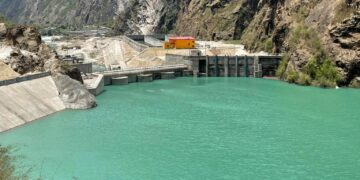
During the event, Electricity Regulatory Commission Chair Dr. Ram Prasad Dhital launched the I-REC calculator, a tool designed to measure Nepal’s carbon footprint. He highlighted Nepal’s untapped potential in carbon trading, stressing that despite its vast hydropower resources, the country has only generated around 3,000 MW of electricity.
Dr. Maheshwar Dhakal, Joint Secretary at the Ministry of Forests, mentioned that while Nepal has received some carbon trade benefits through its forests, there is room for greater gains.
Senior energy expert Prabal Adhikari added that Nepal should leverage carbon trading, especially as it has already begun exporting hydropower to regional markets.
Global Carbon Council Manager Ashok K. Chandel and Eric Solheim of the Global Renewal Alliance also addressed the event. They emphasized that Nepal, situated between economic powerhouses China and India, should maximize its advantages from carbon trading.
Established in 2001, IPPAN serves as a bridge between the private sector and government bodies involved in hydropower development, ensuring that Nepalese citizens benefit from these efforts.
ProClime, a climate-first service provider, leads the transition to a net-zero future through its three core focus areas: Carbon Projects, Carbon Trade, and Climate Investments, supported by comprehensive advisory services.