
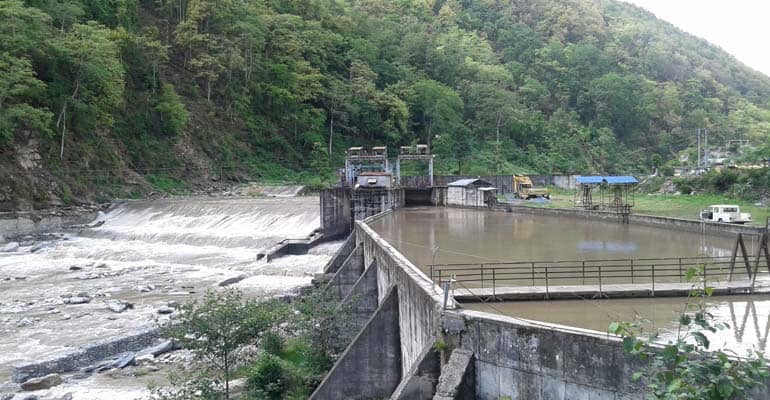
A 270-megawatt semi-reservoir-based hydropower project is set to be developed on the Bheri River, spanning Nalgadh Municipality in Jajarkot and Aathbiskot Municipality in Rukum West. The project will be undertaken by China Gezhouba Group Company Limited.

The Ministry of Forests and Environment convened a meeting on Tuesday to review the Environmental Impact Assessment (EIA) report, a key step required by the Environment Protection Act, 2076 BS. During the discussion, Ministry Joint Secretary Dhirendra Kumar Pradhan emphasized the importance of implementing the project with minimal impact on local biodiversity, as well as on the livelihoods of indigenous and local communities.
Under Secretary Ramesh Basnet noted that the EIA report is not merely procedural but serves as a scientific and legal foundation to ensure the sustainable execution of the project.
Experts from various sectors—including biodiversity, socio-economics, culture, and aquatic life—offered insights into the potential impacts and mitigation measures outlined in the report.
Dr. Jyoti Prasad Gajurel, Executive Director of the Natural Resources and Agriculture Center (NRAC)—the authorized body for conducting the environmental study—stated that the project will require 24.75 hectares of land and the removal of 152 trees. A 38-meter-high dam will be constructed to store water for six hours, with the entire project expected to be completed within five years at an estimated cost of Rs 46 billion.
The powerhouse will be located in Jyamire, Aathbiskot Rural Municipality, Rukum West, and will involve the construction of a seven-kilometer tunnel. To access the site, an 11-kilometer auxiliary road and three Bailey bridges over the Bheri River will also be built.
As the project progresses, concerns from local residents and stakeholders will remain a critical consideration, especially in balancing infrastructure development with environmental and social responsibility.