

The government has reduced the annual budget for the current fiscal year (FY 2025/26) by 14.06 percent, trimming Rs 276 billion from the originally announced Rs 1.964 trillion allocation.
Presenting the mid-term budget review on Tuesday, officials attributed the cut to sluggish capital spending, weak revenue collection, and lower-than-expected foreign loan disbursements. Following the revision, the total budget now stands at Rs 1.688 trillion.
Mid-year budget reductions have become increasingly common. In the previous fiscal year, the government downsized the budget by Rs 168 billion (9.01 percent). Likewise, the FY 2023/24 budget was reduced by 12.62 percent, bringing it down to Rs 1.530 trillion.
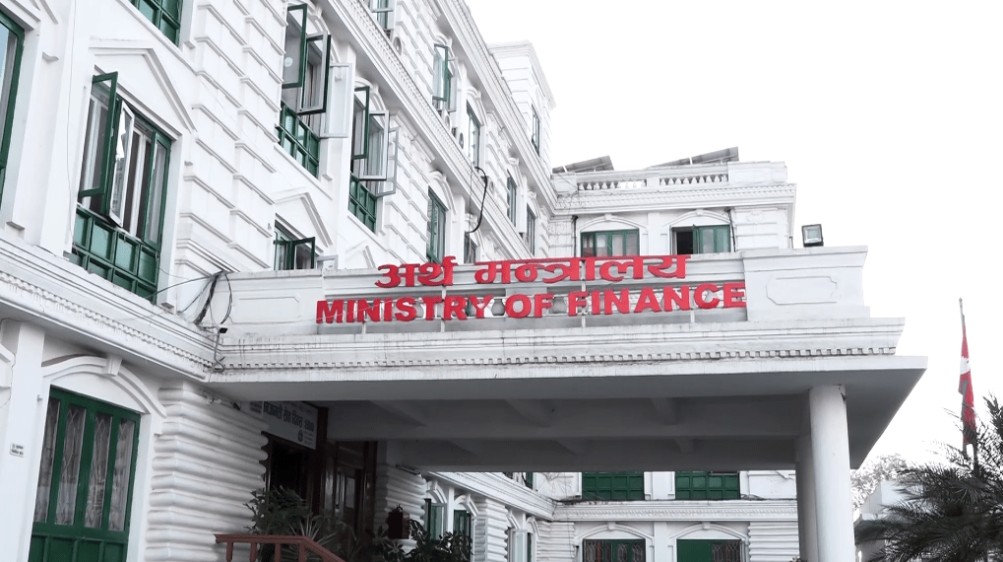
Speaking at a Ministry of Finance (MoF) program, Finance Minister Rameshore Khanal said the revision was intended to ensure fiscal discipline. He emphasized that the move reflects the government’s commitment to implementing a realistic and practical budget rather than a populist one.
Under the revised estimates, recurrent expenditure has been set at Rs 1.125 trillion, representing 95.34 percent of the original allocation. Capital expenditure has been significantly reduced to Rs 243.30 billion (59.65 percent of the initial allocation), while financial management expenditure now stands at Rs 319.04 billion (85.02 percent). Previously, capital spending was allocated Rs 407.89 billion and financial management Rs 375.24 billion.
The government has also lowered its revenue target from Rs 1.480 trillion to Rs 1.315 trillion. According to MoF data, revenue collection during the first half of the fiscal year reached Rs 581.40 billion, falling short of the Rs 711.20 billion target.
To control unproductive spending, the government has introduced austerity measures. After taking office, Finance Minister Khanal canceled small and inadequately prepared projects worth Rs 119.53 billion.
He further stated that Rs 42 billion has been released for projects already in the procurement stage. At present, the government is prioritizing funding for the reconstruction of infrastructure damaged during the Gen Z movement and for meeting mandatory financial obligations.