
CEO Tab
  • Home
  • Prime News
  • International Market
  • Special Report
  • Corporate
  • Opinion
  • Next Gen
  • Entertainment
No Result
View All Result
CEO Tab
  • Home
  • Prime News
  • International Market
  • Special Report
  • Corporate
  • Opinion
  • Next Gen
  • Entertainment
No Result
View All Result
CEO Tab
No Result
View All Result
Home Prime News

As high as 74 percent of Nepali households still use firewood and other harmful fuels: WB

CEO TAB by CEO TAB
November 26, 2019
in Prime News
0
As high as 74 percent of Nepali households still use firewood and other harmful fuels: WB
76
SHARES
1.3k
VIEWS
Share on FacebookShare on Twitter

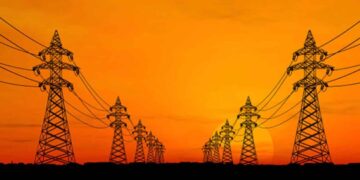
Kathmandu, November 26: Despite this progress on the coverage and quality of electricity access in recent years, a large number of Nepali households still use firewood and other polluting and harmful fuels for cooking in Nepal, states a survey report recently released by the World Bank (WB).

You might also like

Finance Minister Wagle Urges AIIB to Expand Investment in Nepal

Government Prepares Alternative Power Supply After 430 MW Disconnected by Bhotekoshi Flood

Insurance Authority Eases Claim Rules to Speed Compensation for Rasuwa Flood Victims

According to it, almost 73.5 percent of households in Nepal cook with firewood, animal waste, crop residue or plant biomass while less than two out of 10 households — about 17.5 percent — have access to modern cooking services, according to the survey report.

“Nevertheless, 95 out of 100 households in Nepal have access to electricity, while 72 out of 100 households have access to reliable, affordable and uninterrupted access to electricity for a significant part of the day, marking remarkable progress over the past decade,”  states the survey report.

“Providing access to high-quality energy services to each and every person in Nepal is one of the top priorities of the government. We are working to achieve 100 percent energy access by the year 2023,” said Dinesh Kumar Ghimire, secretary of the Ministry of Energy, Water Resources and Irrigation.
 About 67 percent of households enjoy uninterrupted access to electricity for at least eight hours a day, where supply is affordable, reliable and conducive for the use of household appliances like fans and televisions. Overall, about 71.7 percent of households draw electricity from the national grid, while 23 percent are connected to off-grid sources like micro or mini-hydro and solar power.

“Since the 2017 survey, Nepal has made further progress by increasing the grid electrified population from 72 to 78 percent. The country has been load-shedding free since 2018,” said Faris H Hadad-Zervos, World Bank country manager for Nepal.

The Nepal national household-level survey is part of the Global Survey on Energy Access, which relies on the Multi-Tier Framework (MTF) approach piloted by the World Bank with the support of the Energy Sector Management Assistance Programme (ESMAP). This is the first time a survey has tracked the quality of electricity access across households in Nepal, compared to a more conventional, binary approach.

“The government is determined to put more emphasis on clean cooking solutions in order to achieve one electric stove in every home, as stated in the vision laid out in the Energy White Paper in 2018, to end the heavy reliance on imported liquefied petroleum gas for cooking,” said Madhusudhan Adhikari, executive director of the Alternative Energy Promotion Centre.

The survey suggests that for better quality of electricity access, households that access electricity through the grid, micro-hydro and mini-hydro sources must have electricity available for longer hours, particularly between 6:00 pm to 10:00 pm, where supply is reliable with fewer, unexpected interruptions and voltage fluctuation issues.

 Households using solar devices and other low capacity sources of electricity will need to switch over to the grid or high-capacity off-grid solutions in the medium to long terms. For last-mile connections, households with no electricity can be offered low-cost renewable electricity with flexible payment options as an interim solution.

Share30Tweet19
CEO TAB

CEO TAB

Recommended For You

Finance Minister Wagle Urges AIIB to Expand Investment in Nepal

by CEO Tab
September 30, 2026
0
Finance Minister Wagle Urges AIIB to Expand Investment in Nepal

Finance Minister Dr Swarnim Wagle has urged the Asian Infrastructure Investment Bank (AIIB) to increase investment in Nepal’s infrastructure and productive sectors while making its financing more accessible...

Read more

Government Prepares Alternative Power Supply After 430 MW Disconnected by Bhotekoshi Flood

by CEO Tab
September 30, 2026
0
Government Prepares Alternative Power Supply After 430 MW Disconnected by Bhotekoshi Flood

The government has begun making alternative arrangements after around 430 MW of electricity was disconnected from the national transmission system following damage caused by the Bhotekoshi flood to...

Read more

Insurance Authority Eases Claim Rules to Speed Compensation for Rasuwa Flood Victims

by CEO Tab
September 30, 2026
0
Insurance Authority Eases Claim Rules to Speed Compensation for Rasuwa Flood Victims

The Nepal Insurance Authority (NIA) has relaxed insurance claim procedures to ensure faster compensation for victims of the devastating Rasuwa flood of August 26. Under a special work...

Read more

Himalaya Airlines Resumes Regular Kathmandu–Shanghai Flights

by CEO Tab
September 30, 2026
0
Himalaya Airlines Resumes Regular Kathmandu–Shanghai Flights

Himalaya Airlines has resumed regular direct flights between Kathmandu and Shanghai, reconnecting Nepal with one of China’s major commercial hubs. According to the airline, regular flights from Tribhuvan...

Read more

Floods and Landslides Halt Over 900 MW of Electricity Generation Across Nepal

by CEO Tab
September 28, 2026
0
Floods and Landslides Halt Over 900 MW of Electricity Generation Across Nepal

Incessant rainfall has triggered floods and landslides that have disrupted electricity generation and supply across Nepal, with more than 900 MW of generation capacity currently halted. According to...

Read more
Next Post
Remittance inflows decline by 4.9 percent

Remittance inflows decline by 4.9 percent

Leave a Reply Cancel reply

Your email address will not be published. Required fields are marked *

Browse by Category

  • Corporate
  • Entertainment
  • Featured
  • International
  • Major Story
  • Next Gen
  • Opinion
  • Prime News
  • Special Report
  • Tete – A – Tete

EDITOR

Manish Raj Poudel
info@ceotab.com
9841317747


PUBLISHED BY

Welcome Group
www.welcomeadnepal.com

Publisher

www.ceotab.com is a premium news portal being run by Welcome Group. The website features quality business/economic news contents,  in-depth profiles of companies, stories of struggle and success of entrepreneurs, articles that assess various dimensions of  the commerce, trade and economy.

Editor

Manish Raj Poudel

info@ceotab.com

9841317747

Sub-Editor

Riza Poudel

poudelriza@gmail.com

Archives

© 2023 CEO Tab. All rights reserved.

No Result
View All Result
  • Home
  • Prime News
  • International Market
  • Special Report
  • Corporate
  • Opinion
  • Next Gen
  • Entertainment

© 2023 CEO Tab. All rights reserved.