
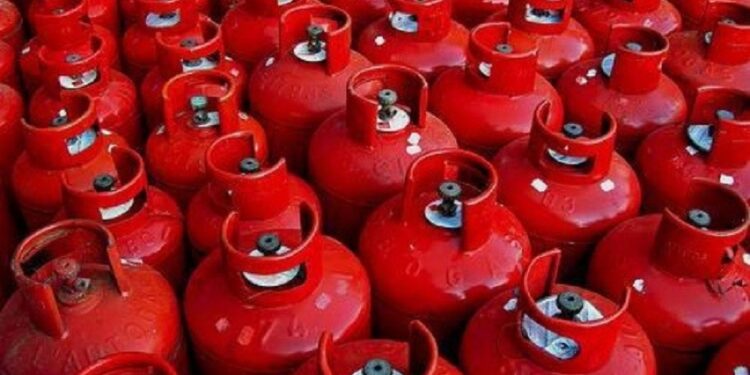
Nepal’s cooking gas shortage has worsened despite the government’s decision to sell LPG cylinders directly to consumers, with long queues and supply disruptions continuing across the Kathmandu Valley.

The Nepal Oil Corporation (NOC) began selling LPG cylinders through designated outlets on Saturday after a nationwide shortage persisted for nearly a month. Consumers are required to present their citizenship certificates or National Identity Cards to purchase gas. However, many people who spent hours waiting in queues on Sunday returned home without being able to obtain a cylinder.
The government’s direct-sales initiative was intended to provide immediate relief, but consumers say it has instead created longer queues and additional hardship. Many have been forced to carry empty cylinders long distances and wait for hours, often in heavy rain and heat, only to return without gas.
The Gas Sellers Federation Nepal has also opposed the government’s direct distribution system, arguing that bypassing authorised dealers has disrupted the established supply chain. Federation President Gyaneshwar Aryal called for the immediate restoration of the dealer-based distribution system, saying consumers should be able to obtain gas from outlets closer to their homes.
The NOC, however, maintains that LPG imports and supplies have remained substantial. According to the corporation, Nepal imported 54,505 tonnes of LPG by Sunday—the highest monthly import volume from India so far. In Shrawan alone, around 3.838 million cylinders were reportedly supplied to consumers, compared with estimated monthly consumption of approximately 3.5 million cylinders.
This has raised questions about where the additional cylinders have gone and why consumers continue to face shortages despite supplies reportedly exceeding monthly demand.
The Gas Sellers Federation has claimed that LPG imports during the past four months were around 60,000 tonnes lower than previously and has also blamed the rapid increase in the number of cylinders circulating in the market. It estimates that around eight million cylinders are currently in circulation, which it says is far more than necessary.
Consumers have meanwhile criticised the requirement to produce citizenship certificates or National Identity Cards, arguing that the measure adds another layer of difficulty to an already chaotic distribution process.
Industry, Commerce and Supply Minister Gauri Kumari said the government decided to intervene because of concerns over the existing dealer-based distribution system. According to her, complaints had been received about dealers and sellers allegedly charging higher prices and consumers obtaining multiple cylinders.
The government has therefore continued direct sales through designated locations in the Kathmandu Valley, including the NOC premises in Teku, the Animal Services Branch in Budhanilkantha, Nayabazar Judo Hall, Tarakeshwar Municipality, Chandragiri Municipality and the National Tuberculosis Centre.
However, the continuing queues suggest that direct government sales have yet to resolve the underlying supply and distribution problems. Consumers are increasingly calling for the government to restore an efficient local distribution network while addressing the causes of the shortage rather than relying on temporary sales centres.
The ongoing crisis has highlighted deeper weaknesses in Nepal’s LPG distribution system, raising concerns over supply management, market monitoring, dealer coordination and accountability. Unless these structural issues are addressed, temporary government sales are unlikely to provide a lasting solution to the country’s cooking gas shortage.