

Nepal’s recent export of electricity to Bangladesh marks a historic moment in the country’s energy trade. On Friday, November 15, 2024, Nepal began exporting 40 megawatts (MW) of electricity to Bangladesh, making it the first time that Nepal has sold electricity to a country other than India. Prior to this, Nepal had only exported power to India, but now Bangladesh joins India as the second country to receive electricity from Nepal.
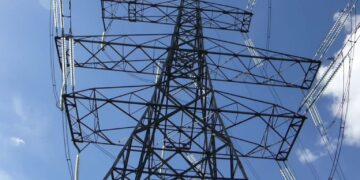
The electricity is transmitted via a two-country route. Initially, the power is sent from Nepal to the Muzaffarpur substation in India through the 400 kV Dhalkebar-Muzaffarpur transmission line. From there, it is transmitted across the border into Bangladesh via the 400 kV Baharampur-Bheramara transmission line. This arrangement is part of a broader effort to strengthen regional energy trade in South Asia.
The export was officially inaugurated in a virtual ceremony by key officials, including Nepal’s Minister for Energy, Water Resources, and Irrigation, Deepak Khadka; India’s Minister for Power, Manohar Lal; and Muhammad Fouzul Kabir Khan, the adviser to the Ministry of Power, Energy, and Mineral Resources of Bangladesh. The electricity export to Bangladesh began at 12:30 PM on November 15 and continued until midnight, with the next phase of the export scheduled to resume on June 15, 2025, after the winter season ends.
This power export is part of a broader agreement made between Nepal, India, and Bangladesh, which was formalized on October 3, 2024. Under this agreement, Nepal is allowed to export 40 MW of electricity to Bangladesh annually during the monsoon season (from June 15 to November 15). The power being exported comes from two hydroelectric projects in Nepal: the Trishuli Hydropower Project (which generates 18.6 MW) and the Chilime Hydropower Project (20.4 MW).
The export deal is financially beneficial for Nepal. The Nepal Electricity Authority (NEA) earns 6.40 cents per unit of electricity (roughly Rs 8.62 at the current exchange rate). For the initial 11.5-hour period on November 15, the NEA earned approximately USD 28,160 from this export.
This historic move is expected to continue for the next five years, with the Central Electricity Authority of India granting permission for the export until October 2, 2029. This arrangement not only provides Nepal with a new source of revenue but also strengthens its role in the regional energy market, helping to diversify its export options and contributing to regional energy security in South Asia.