
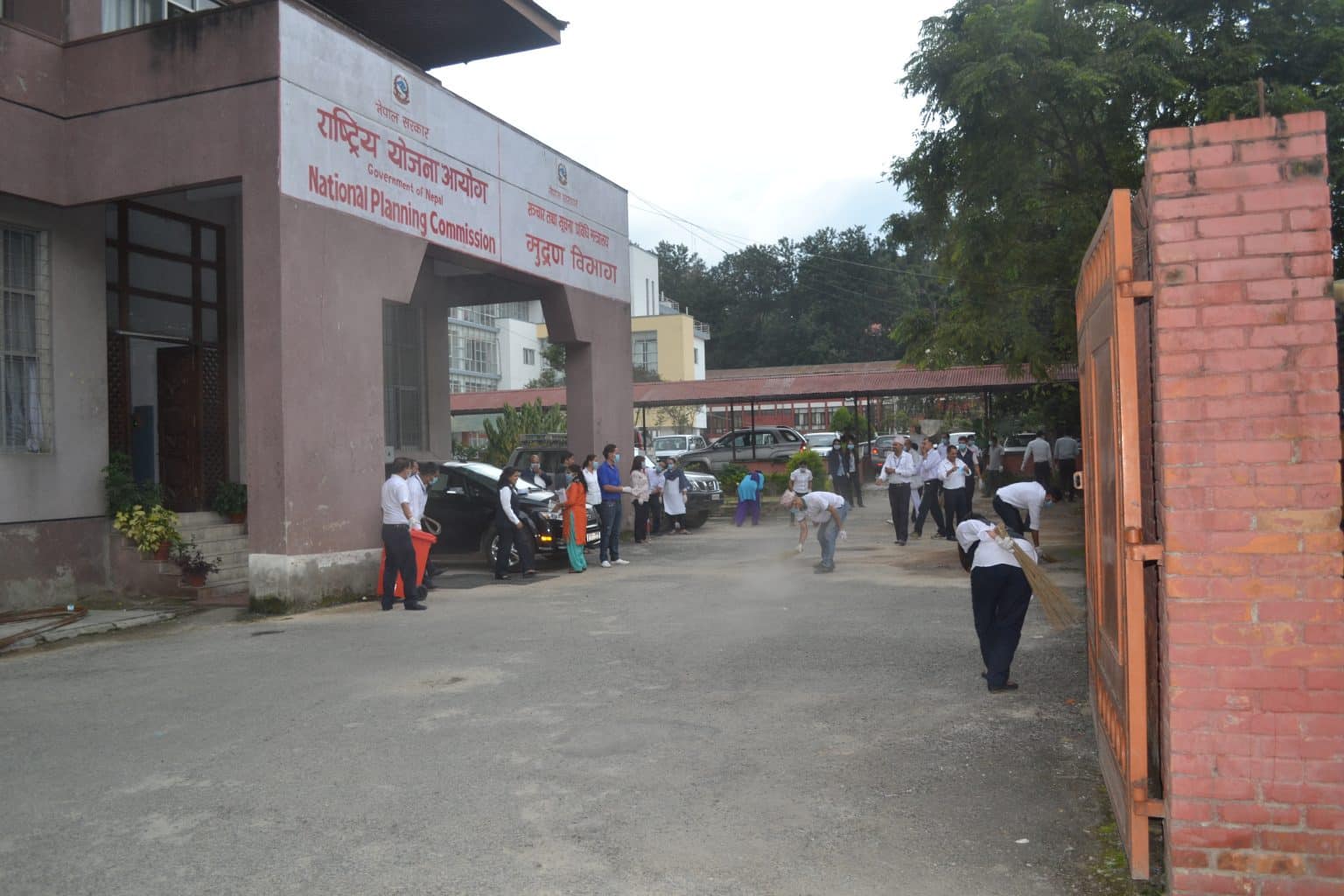
Kathmandu: The National Planning Commission (NPC) has recommended that the government significantly reduce the number of national pride projects, arguing that a smaller and better-funded portfolio would help curb chronic delays, escalating costs, and weak implementation.
Speaking before the parliamentary Finance Committee on Monday, NPC Member-Secretary Rabilal Pantha said the current list of 27 national pride projects should be reduced to no more than 10. According to him, many of the existing projects continue to face policy, legal, financial, and practical challenges that have slowed implementation and increased costs.
“The government should prioritize a limited number of strategically important projects so that adequate financial resources can be allocated and implementation can be completed within the scheduled timeframe,” Pantha said.
His remarks come as concerns continue to grow over repeated cost overruns and delays in several of Nepal’s flagship infrastructure projects.
The Office of the Auditor General (OAG), in its 63rd Annual Report, has warned that construction costs of several national pride projects are expected to increase by as much as 113 percent due to prolonged delays and slow progress.
According to the report, the government has already spent Rs 104.92 billion on six projects under the Ministry of Energy, Water Resources and Irrigation, while their estimated total cost has risen to more than Rs 217.16 billion. Physical progress of these projects ranges between 26.65 percent and 82.27 percent, highlighting significant implementation gaps.
Similar concerns were raised in the government’s Economic Survey for Fiscal Year 2025/26, which noted that despite years of investment, many major road and highway projects remain incomplete.
The survey stated that although these initiatives have been designated as national pride projects, many have failed to achieve their targets within the stipulated timeframe, raising serious questions about project planning, efficiency, and institutional accountability.
Pantha suggested that the government review the existing criteria used to designate national pride projects. Projects that do not meet the revised standards, he said, could instead be classified as transformational or priority projects, allowing greater focus on those with national strategic importance.
He also pointed out that the number of national pride projects has expanded from 17 to 27 over the past fifteen years without corresponding improvements in project preparation, financing, or implementation capacity.
According to Pantha, efforts to introduce alternative financing instruments—including sovereign wealth bonds, offshore bonds, and thematic bonds—have failed to materialize due to inadequate coordination among the National Planning Commission, Ministry of Finance, and Nepal Rastra Bank.
During the committee meeting, Rastriya Swatantra Party (RSP) lawmaker Lima Adhikari Acharya criticized the government’s project management, saying repeated delays have placed a substantial financial burden on the state.
“Although the number of national pride projects has increased over the years, there has been insufficient prioritization and proper classification,” she said.
She also questioned whether the government conducts adequate cost-benefit analyses before approving large-scale infrastructure projects.
Several flagship projects have experienced dramatic cost escalations. The estimated cost of the Babai Irrigation Project has increased from Rs 2.87 billion to Rs 18.96 billion, while the Railway and Metro Development Project has risen from Rs 70.62 billion to Rs 955.22 billion.
Acharya further noted that projects such as the President Chure Conservation Programme and the Upper Tamakoshi Hydropower Project have also witnessed unusually large increases in project costs, underscoring the need for stronger planning, monitoring, and financial discipline.
The discussion reflects growing consensus among policymakers and oversight agencies that Nepal must shift from expanding the number of flagship projects to ensuring timely completion of a smaller number of strategically important investments. Experts argue that stronger project selection, realistic budgeting, improved inter-agency coordination, and rigorous monitoring will be essential to improve infrastructure delivery and maximize public investment.