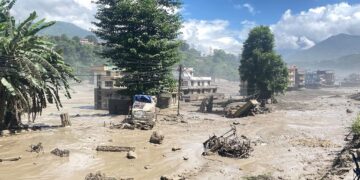
Massive floods in the Bhotekoshi and Trishuli river systems have severely damaged operational power projects with a combined capacity of 431.1 MW, raising serious concerns about Nepal’s ability to manage electricity demand during the upcoming winter season.
According to the Nepal Electricity Authority (NEA), the disaster has disrupted 406.1 MW of hydropower generation capacity and a 25 MW solar plant, in addition to causing significant damage to critical transmission infrastructure. The affected hydropower projects include Rasuwagadhi, Salasungi (Sanjen), Upper Trishuli 3A, Sanjen, Trishuli, Upper Mailung, Mailung Khola, Upper Sanjen, Devighat, Langtang and Chilime.
The floods have also damaged several major transmission lines and towers, including the Chilime 220 kV hub tower and transmission corridors connecting Chilime, Trishuli, Samudratar, Matatirtha and Balaju. NEA spokesperson Rajan Dhakal said the full extent of the damage is still being assessed, adding that clearing the affected sites alone could take considerable time before reconstruction can begin.
Nepal’s total installed electricity generation capacity had reached 4,120 MW by the end of FY 2025/26, with the country exporting more than 1,000 MW of electricity to India during periods of peak production. However, electricity generation declines significantly during winter as Nepal relies heavily on run-of-river hydropower projects, while domestic demand increases during the dry season.
The extensive flood damage has therefore added new pressure on the country’s power supply system. Dhakal warned that reconstruction would require billions of rupees and face major logistical challenges. He said Nepal could face difficulties managing electricity demand during winter if other under-construction projects fail to come into operation on schedule.
Meanwhile, 15 hydropower projects under construction have also been severely affected by the disaster. Projects including Upper Trishuli-1, Rasuwa-Bhotekoshi, Upper Mailung, Upper Trishuli 3B and Middle Trishuli Ganga represent around 470 MW of planned generation capacity.
With operational and under-construction projects combined, the floods have affected more than 900 MW of Nepal’s existing and future electricity generation capacity, highlighting the scale of the disaster’s potential impact on the country’s energy sector and the urgent need for restoration and reconstruction.