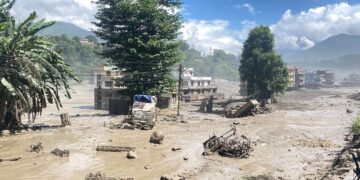

The devastating Bhotekoshi-Trishuli flood has disrupted Nepal’s emerging electricity trade with Bangladesh, bringing power exports to a complete halt after key hydropower projects along the Trishuli corridor were severely damaged.
Before the August 26 disaster, Nepal had been exporting 40 MW of electricity to Bangladesh during the rainy season. Of the total, 18.60 MW was generated by the Trishuli Hydropower Center, while 21.40 MW came from the Chilime Hydropower Project.
However, the flood submerged the powerhouses of both projects, forcing them to suspend electricity generation and halting Nepal’s power exports to Bangladesh.
A Nepal Electricity Authority (NEA) official said the authority has not sought permission to replace the lost generation with electricity from other projects. With much of the infrastructure severely damaged, it remains uncertain how long it will take to resume exports.
The disruption has come at a time when Nepal has been steadily expanding electricity trade with its neighboring countries. The country has been exporting surplus electricity to Bangladesh and India during the rainy season, when domestic power generation is at its peak.
The suspension of exports will also have financial implications. Nepal earned US$9.4 million, equivalent to around Rs 1.29 billion, from electricity exports to Bangladesh between July 1 and November 15 last year.
Addressing Parliament on Wednesday, Prime Minister Balendra Shah said that most of the affected hydropower projects had suffered extensive damage, with only a limited number potentially repairable.
The resumption of Nepal’s electricity exports to Bangladesh will largely depend on the extent of the damage and the time required to restore the affected hydropower infrastructure.