The government appears determined to recover the long-standing dues related to dedicated feeders and trunk lines that have remained unsettled for years.

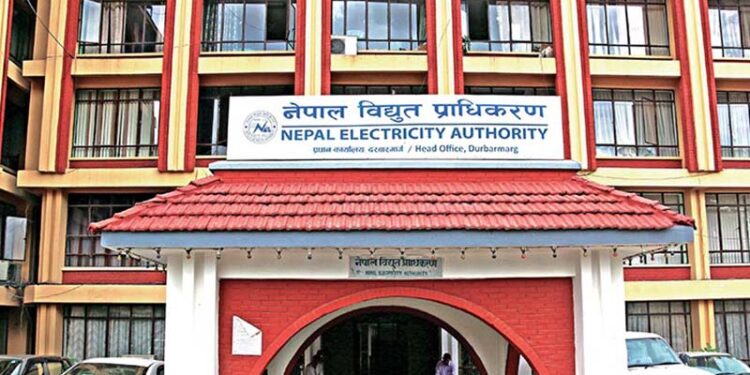
During a meeting held at the Ministry of Energy, Water Resources and Irrigation on Monday, Energy Minister Biraj Bhakta Shrestha instructed the Nepal Electricity Authority (NEA) to prioritize the collection of outstanding dues as part of its regular operations.
The NEA Board has already revived an administrative review committee to facilitate the settlement and recovery process.
Review Committee to Revisit Tariffs and Penalties
Minister Shrestha stated that, with the review committee now in place, no further directives are necessary to move forward with the recovery of dues linked to dedicated feeders and trunk lines.
According to him, the committee will be able to revisit disputed electricity tariffs, penalties, and other related issues, while the NEA should continue to keep the matter high on its daily agenda.
Auditor General Calls for Recovery of Over Rs 50 Billion
In its 63rd Annual Report, the Office of the Auditor General urged the government to recover more than Rs 50 billion in unpaid electricity-related dues.
The arrears include payments owed by:
- Internet service providers;
- Industrial estates;
- Street lighting users; and
- Consumers using dedicated feeders and trunk lines.
Long-Running Dispute Dates Back to Load-Shedding Era
The dispute originated in August 2015, when the NEA introduced premium tariffs for industries receiving uninterrupted electricity supply through dedicated feeders and trunk lines during the period of severe load-shedding.
Under the arrangement, high-energy-consuming industries were required to pay additional charges above regular electricity tariffs. The NEA has maintained that several industries failed to pay these premium charges despite consuming electricity during peak load-shedding periods.
Despite repeated notices and deadlines over the past decade, many industries have refused to settle the disputed bills.
Administrative Review Process Revived
The latest review committee, headed by Krishna Basnet, allows concerned industrialists to seek administrative review of disputed dues accumulated over the years.
The review mechanism was first introduced in March 2024 by former Energy Minister Deepak Khadka during the government led by KP Sharma Oli. However, the process was halted after then NEA Executive Director Kulman Ghising dissolved the committee in October 2024.
To encourage participation, the previous NEA management had lowered the deposit requirement for review applications from 25 percent to 5 percent of the disputed amount. Following this decision, 46 industries applied for administrative review, but the process stalled amid political developments and the Gen Z-led protests.
Fresh Notices Issued Under New NEA Leadership
On April 13, the NEA, under Executive Director Hitendra Dev Shakya, issued a new public notice directing industries with unpaid bills from mid-January 2016 to mid-May 2018 to clear their dues within the specified deadline.
Last year, the authority disconnected electricity supply to 23 manufacturing industries after they failed to respond to settlement calls. Industries were offered the option of paying the dues in up to 28 installments or applying for administrative review.
Outstanding Dues Reach Rs 26.95 Billion
The Ministry of Energy, Water Resources and Irrigation has published a list of 61 consumers whose disputed dues under the dedicated feeder and trunk line system have reached Rs 26.95 billion.
According to the ministry, the total outstanding amount, including interest and penalties, had surpassed Rs 26.95 billion as of mid-December 2025. The outstanding amount stood at Rs 26.33 billion as of mid-July 2025.
Among the defaulters, Jagadamba Steel Pvt Ltd tops the list, with arrears amounting to Rs 4.69 billion.
The government’s renewed push signals a stronger commitment to resolving one of Nepal’s most contentious electricity disputes and recovering billions of rupees in unpaid revenue that has remained locked in litigation and administrative deadlock for nearly a decade.