
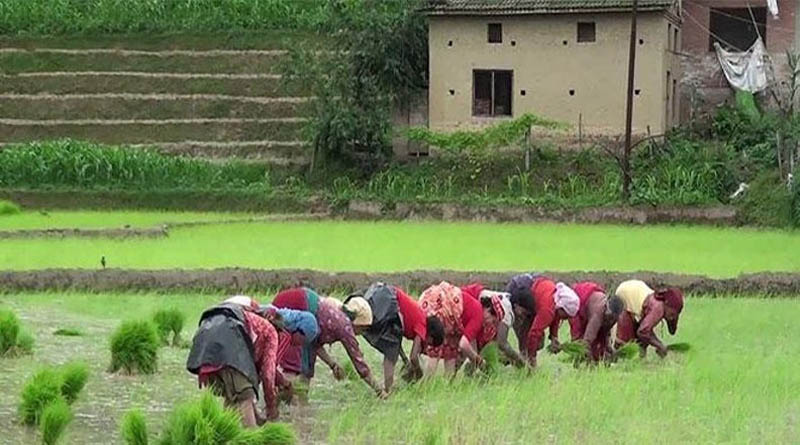
Nepal is celebrating National Paddy Day (Asar 15) across the country today, with farmers planting rice in muddy fields and people observing the traditional custom of eating curd and beaten rice (dahi chiura)—a practice deeply rooted in the country’s agricultural heritage.

Observed annually on the 15th day of the Nepali month of Asar, the festival marks the beginning of the peak rice transplantation season. Farmers traditionally celebrate the occasion by working in paddy fields, singing folk songs, and sharing curd and beaten rice, which is believed to restore energy and help keep the body cool during the physically demanding planting season.
Beyond farming communities, people from various professions also celebrate the day by eating dahi chiura, making it one of Nepal’s most widely observed cultural traditions.
Curd holds a special place in Nepali culture and is regarded as a symbol of good fortune. It is customary to offer curd as an auspicious blessing before important events such as starting a new journey, leaving for foreign employment, or undertaking significant tasks. Many people also apply a mixture of curd and rice grains (akshata) on the forehead as part of traditional rituals.
From a nutritional perspective, curd is considered beneficial for digestion and overall health. Ayurveda recommends consuming buttermilk prepared from curd after meals, describing it as an effective natural digestive aid. Curd and beaten rice are also commonly regarded as a simple home remedy for digestive ailments, including diarrhea.
National Paddy Day Since 2005
The Government of Nepal officially began observing National Paddy Day in 2005 (2062 BS) following a ministerial decision taken in December 2004 (2061 BS). The day recognizes the importance of agriculture, which remains the primary livelihood for a large share of Nepal’s population.
The celebration is characterized by lively paddy plantation activities, with farmers singing traditional Asare folk songs while transplanting rice in waterlogged fields. Young men and women often participate in playful mud activities, reflecting a long-standing rural tradition that symbolizes prosperity and the arrival of the monsoon.
Delayed Monsoon Slows Plantation
This year’s celebrations, however, come amid concerns over delayed monsoon rainfall. Insufficient rainfall across many parts of the country has slowed paddy transplantation, leaving plantation progress well below normal for this time of year.
Farmers in several districts have also reported shortages of chemical fertilizers, raising concerns about this year’s rice production. However, the Ministry of Agriculture, Forests and Environment has maintained that adequate stocks of chemical fertilizers are available and that distribution efforts are continuing.
As Nepal’s most important staple crop, rice plays a vital role in the country’s food security and rural economy. Authorities remain hopeful that improved monsoon conditions in the coming weeks will accelerate plantation and support a successful harvest despite the delayed start to the season.