

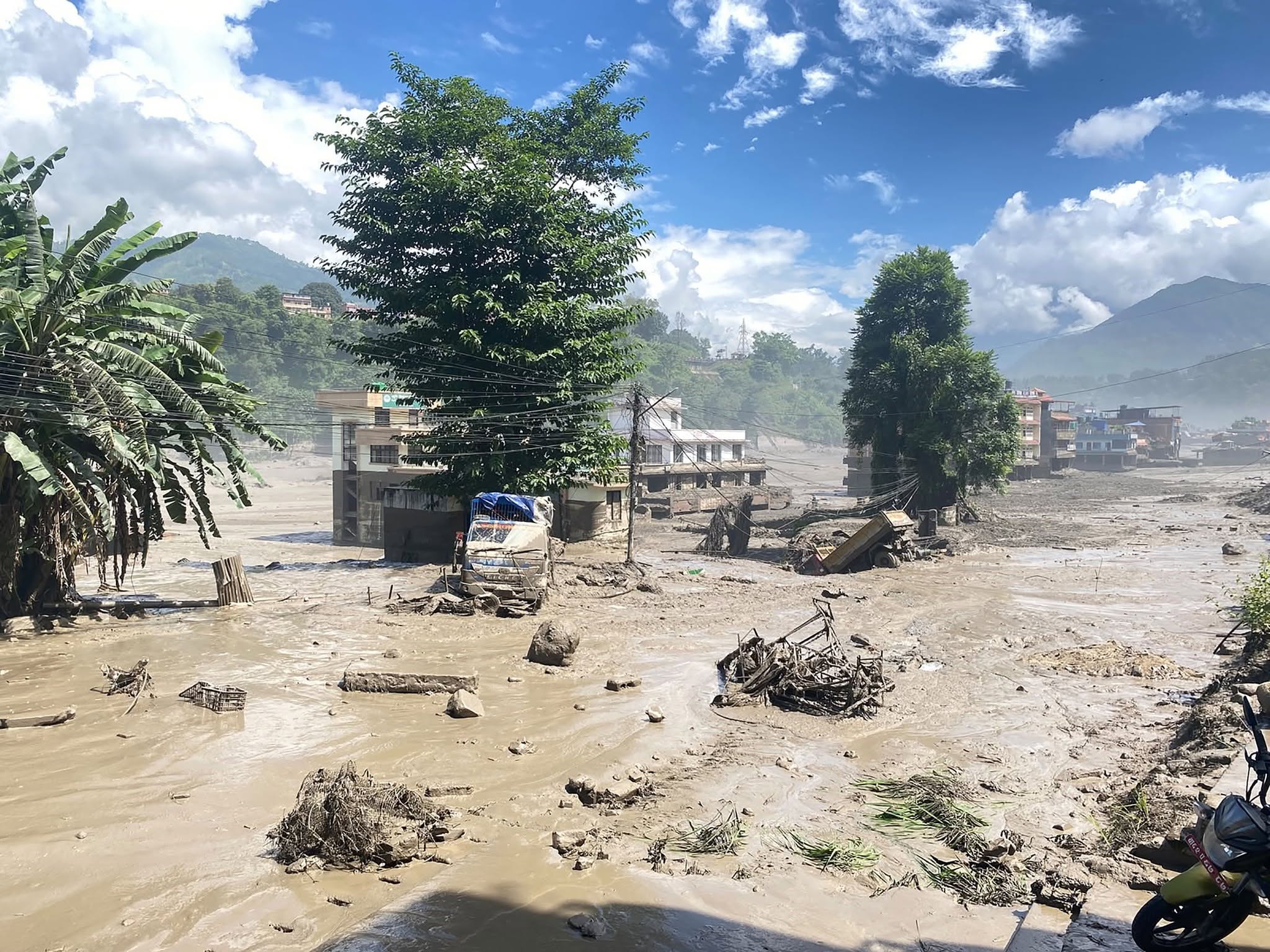
Nepal is estimated to require Rs 390.62 billion to reconstruct and rehabilitate energy infrastructure damaged by the devastating floods that swept through the Bhotekoshi–Trishuli river corridor on August 26.

Briefing the House of Representatives on Wednesday, Minister for Energy, Water Resources and Irrigation Biraj Bhakta Shrestha presented preliminary estimates of the damage to the energy sector and the resources required for restoration and reconstruction.
According to Shrestha, the disaster forced 11 power plants to shut down, disrupting 410 MW of generation capacity. Seven hydropower plants and one solar power plant, with a combined capacity of around 275 MW, suffered direct flood damage.
Three additional hydropower projects with a combined generation capacity of 135 MW have also remained out of operation because their transmission lines were damaged, despite the projects themselves not sustaining direct physical damage.
The floods also affected hydropower projects under construction. Shrestha said six under-construction projects with a combined capacity of 508 MW sustained damage.
The disaster caused extensive destruction to transmission, distribution and renewable energy infrastructure. The 220 kV Trishuli-3 ‘B’ Hub substation in Trishuli was completely destroyed, while the Matatirtha–Chilime 220 kV hub was disrupted.
Similarly, the 132 kV Trishuli-3 ‘B’ Hub–Matatirtha and 66 kV Chilime–Matatirtha transmission lines sustained damage. The Chilime, Upper Trishuli-3 ‘A’ and Devighat switchyards were also affected, along with numerous distribution lines and utility poles.
More than 800 people working on energy-sector projects remain unaccounted for following the disaster. Shrestha said 47 Nepal Electricity Authority employees were among those reported missing.
To provide relief to flood-affected electricity consumers, the government has decided to waive minimum electricity billing charges from the previous month. Consumers whose electricity meters were damaged in the floods will also receive replacement meters free of charge when they apply to resume electricity services.
The government is also studying the possibility of providing additional electricity tariff concessions to consumers in 15 affected municipalities.
Shrestha said the extent of the destruction highlighted the need to prioritize disaster-risk management in the development of hydropower and other energy infrastructure.
He added that the Ministry of Energy had directed concerned agencies to incorporate safer and more disaster-resilient designs into future hydropower projects and energy infrastructure to reduce the risk of damage from natural disasters.