
The government has spent only 32.53 percent of its allocated development budget, raising concerns over weak capital expenditure performance with just one month remaining in the current fiscal year.

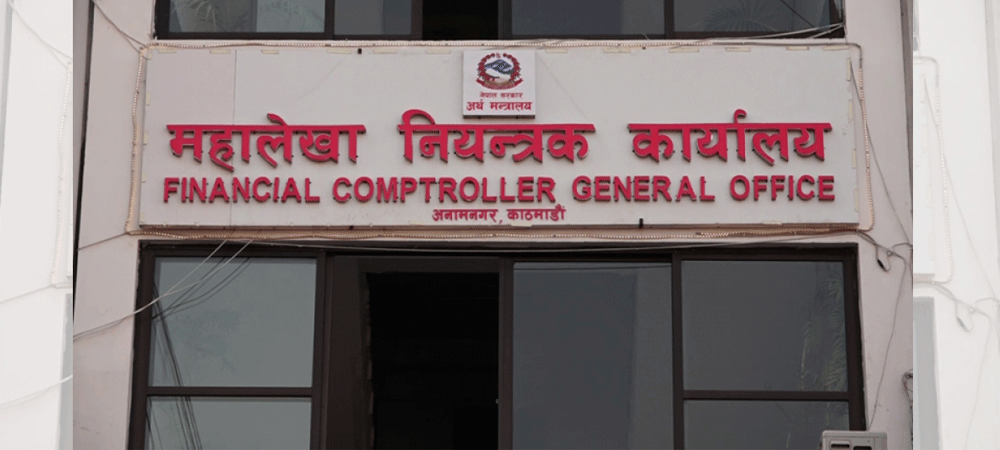
According to records from the Financial Comptroller General Office (FCGO), the government has spent only Rs 132 billion out of the Rs 478 billion allocated under capital expenditure as of the end of the 11th month of the fiscal year. This leaves 67.47 percent of the development budget unspent, creating pressure on authorities to accelerate spending within a very short time.
The current performance is also lower compared to the same period last fiscal year. In FY 2024/25, capital expenditure stood at Rs 144.48 billion, or 41.01 percent, during the same 11-month period.
Experts note that slow development spending continues to affect project implementation across the country. Concerns have also been raised about the trend of high-end spending at the end of the fiscal year, which often raises questions about the quality and effectiveness of infrastructure projects. In the previous fiscal year, Rs 15.42 billion was spent in the last two weeks alone.
Recurrent expenditure, however, shows a much higher utilization rate of 76.91 percent. Out of the Rs 1.18 trillion allocated under this category, Rs 908 billion has already been spent.
Debt servicing has also consumed a significant portion of the budget, with 81.47 percent utilization. Out of Rs 375 billion allocated for financial management, Rs 305 billion has been used, indicating that a large share of government spending is going toward administrative costs and debt obligations rather than development activities.
On the revenue side, the government has collected 73.06 percent of its annual target. Out of the Rs 1.48 trillion target, Rs 1.081 trillion has been collected so far, leaving a gap of about Rs 400 billion to be mobilized in the remaining month.
Foreign grants have also fallen short of expectations. Against a target of Rs 53.44 billion, only Rs 22.88 billion has been received so far, further tightening fiscal space at a time when development spending is already lagging.