
The government has unveiled an “Energy Development Roadmap and Working Guideline” to accelerate its ambitious goal of generating 28,500 MW of electricity within the next decade.
According to the Ministry of Energy, Water Resources, and Irrigation (MoEWRI), the roadmap has been submitted to the Cabinet for final approval. The plan outlines measures to secure investments to significantly boost the nation’s electricity generation capacity, which currently stands at 3,200 MW.
The strategy envisions producing 28,000 MW of electricity by 2035, with 13,000 MW designated for domestic use and 15,000 MW intended for export to countries such as India. Under a bilateral energy agreement, Nepal aims to export up to 10,000 MW to India over the next ten years.
Achieving this target will require an estimated Rs 6.1 trillion in investment. While the government is focusing on transformative changes in the energy sector by involving private players, concrete plans to secure the necessary funding remain lacking. The roadmap proposes swift actions to arrange financial resources for government-led projects while assigning others to private sector entities. A total investment of USD 46 billion is estimated for the comprehensive development of the energy sector.
In a recent development, the National Transmission Grid Company Limited and Hydroelectricity Investment and Development Company (HIDCL) signed a public-private partnership (PPP) agreement to build an electricity transmission line. This initiative supports the government’s broader plan to meet the 28,500 MW target within the next decade.
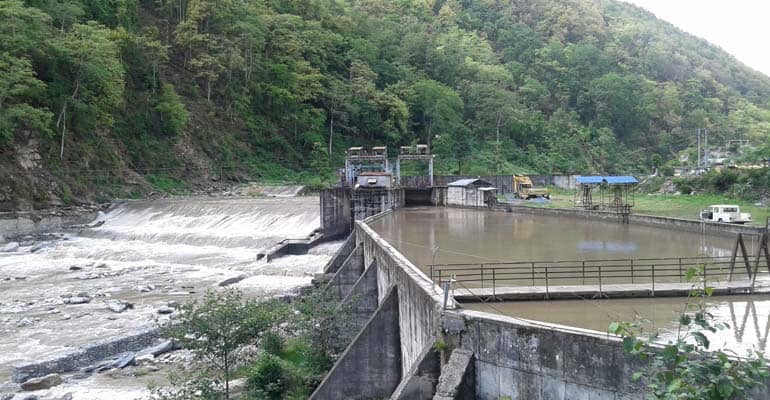
Meanwhile, the 456 MW Upper Tamakoshi Hydroelectric Project (UTHP) has resumed partial operations, producing 100 MW of electricity since Tuesday evening. According to Mohan Gautam, CEO of Upper Tamakoshi Hydropower Limited, maintenance of one of the two desanders allowed water to flow into the tunnel, enabling limited electricity production.
The UTHP had been non-operational since late September due to floods and landslides that damaged its infrastructure. Full restoration is expected to take around six months. The partial resumption comes at a critical time, as India has reduced electricity exports to Nepal during the peak winter season, alleviating some of Nepal’s power shortages during the ongoing dry period.