

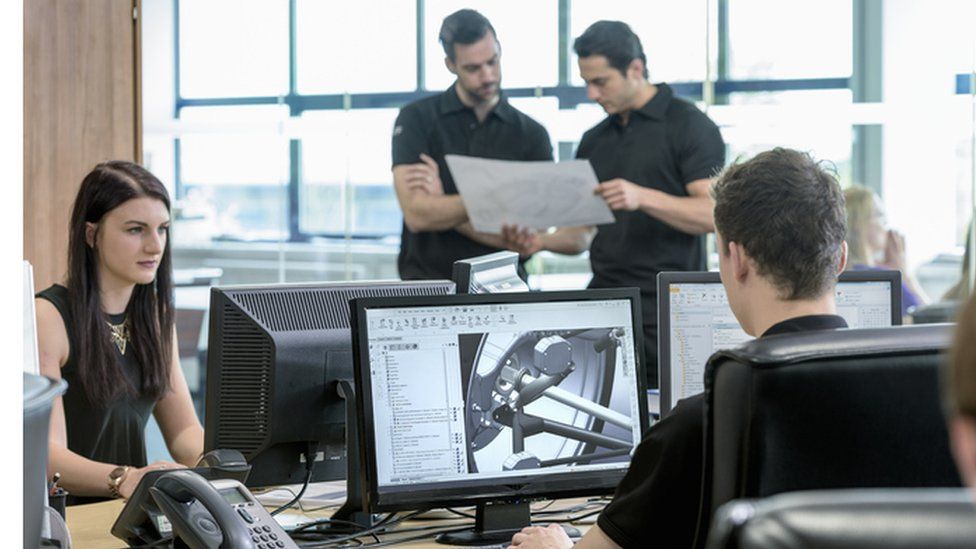
Workers will be able to return to the office after 19 July when Covid restrictions are due to end, British Prime Miniter Boris Johnson has said.

Government guidance that people who can work from home should, is set to end with other restrictions.
Some firms said they were looking forward to “seeing our great towns and cities fill up again”.
However, human resources body CIPD said the removal of restrictions “shouldn’t signal a mass return to workplaces”.
Many office workers have worked predominantly from home since the first lockdown in March last year.
The guidance changed briefly in August last year, when rates of the virus were low, and the government ran an ad campaign to encourage people back into the workplace.
Almost all Covid restrictions are expected to go in two weeks’ time, and it will then be up to employers to determine whether their staff should be in the office.
The Centre for Cities think tank said the number of people back in their place of work across the UK’s largest towns and cities was still just a quarter of what it was pre-pandemic.
Centre for Cities’ Paul Swinney said the lack of people working in offices had been a “real challenge” for shops, cafes and pubs who used to depend on office workers for business.
“The change to the ‘back to the office’ advice will doubtless be good news for them, but a question mark remains over how many workers will return now restrictions have lifted,” he said.
David Abrahamovitch, founder of Grind coffee shops, said the relaxation on office-working rules was “very much welcomed”.
He previously said the four-week delay to restrictions ending “killed the summer” for his London-based coffee shops, which rely on commuters for business.
“We are looking forward to seeing more people back in the city,” he said. “I hope lots of companies will follow the lead of those such as Apple and mandate a return to the office for at least three days per week.”