

Nepal’s economy is projected to grow by 4.61 percent at consumer prices in the current fiscal year (FY 2024/25), according to the National Statistics Office (NSO). The figure, based on data from the first nine months of the fiscal year, surpasses estimates made by international institutions such as the Asian Development Bank (ADB) and the World Bank (WB), which had forecast growth rates of 4.4 percent and 4.5 percent, respectively.
This projection also marks a notable recovery compared to recent years. The economy grew by just 1.98 percent in FY 2022/23 and improved to 3.67 percent in the last fiscal year. NSO Director Rishi Ram Sigdel attributed the improvement largely to robust performance in non-agriculture sectors, which are expected to expand by 4.28 percent, up from 3.36 percent a year ago.
Sector-Wise Growth Highlights:
- Electricity, gas, and industry: 13.82% growth
- Transport and storage: 9.45%
- Finance and insurance: 6.29%
- Construction: Strong rebound with 9.1% growth in Q2 (from -0.3% in Q1)
- Retail and industry: Expected to grow positively
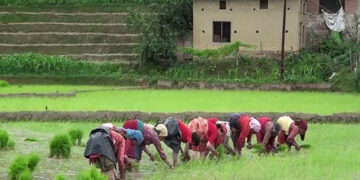
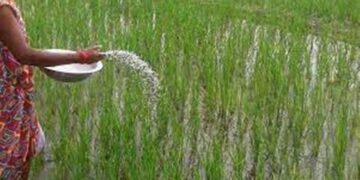
On the flip side, the agriculture sector remains subdued, with a projected growth of 3.28 percent, slightly down from 3.35 percent in the previous fiscal year. This indicates that structural weaknesses in agriculture continue to pose a drag on overall economic performance.
The Gross Domestic Product (GDP) is expected to expand to Rs 6.107 trillion at current prices, up from Rs 5.709 trillion last year. In constant prices, GDP is projected at Rs 5.379 trillion, up from Rs 5.053 trillion.
Despite the encouraging growth trajectory, the country is unlikely to meet the government’s original target of 6 percent economic growth for FY 2024/25, set during the budget announcement.
Additional Economic Indicators:
- Per capita income has risen to USD 1,517, up from USD 1,456, reflecting a modest annual increase of USD 61.
- Remittances are projected to account for 25.89 percent of GDP, a slight increase from 25.32 percent in the previous year, highlighting the ongoing significance of labor migration to Nepal’s economy.
The NSO’s preliminary estimates point to a cautiously optimistic outlook, fueled by improvements in industrial and service sectors, while also underscoring challenges in meeting growth targets and enhancing agricultural productivity.