

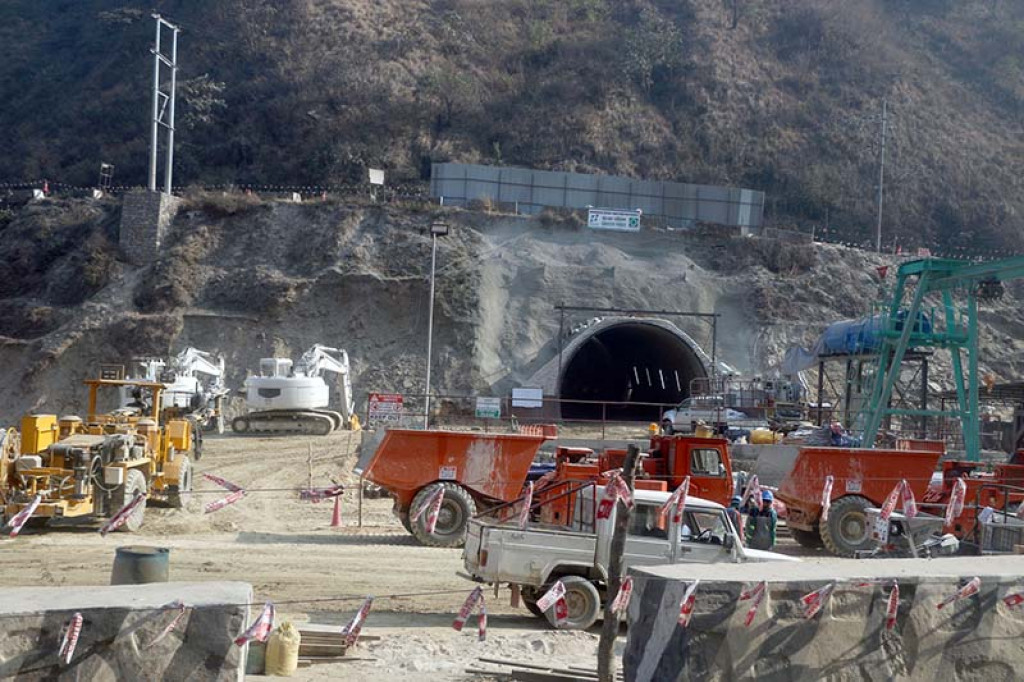
Nepal’s first commercial highway tunnel, the Nagdhunga–Sisnekhola Tunnel Road, is expected to come into operation from mid-July with final technical and operational preparations currently underway.

According to project chief Saujanya Nepal, efforts are being made to complete all remaining arrangements so that the long-awaited tunnel can be opened to traffic within less than two months.
Authorities have already signed an agreement with the company responsible for toll collection and tunnel operation, while staff training and technical preparations are ongoing. Emergency response systems, lighting, ventilation, and other safety infrastructure are also undergoing final testing to ensure round-the-clock operation.
Around 150 employees have been recruited to work in shifts, with training being provided on rescue operations, emergency procedures, and tunnel management.
Project officials informed the National Assembly’s Public Policy and Delegated Legislation Committee that physical progress has reached 99.5 percent, while financial progress stands at 96 percent.
Under a five-year agreement, Yusin–ART JV will handle the operation and maintenance of the tunnel, including civil, mechanical, electrical, and safety systems.
Once operational, the tunnel is expected to ease congestion on the busy Kathmandu–Naubise route by shortening travel time and providing a more efficient route for passenger and freight vehicles.
The main tunnel is 2,688 meters long, while the emergency tunnel stretches 2,557 meters. Authorities estimate that around 8,000 vehicles will use the tunnel daily, generating approximately Rs 350 million in annual toll revenue.
An electronic toll collection system has already been installed. Toll revenue will be deposited into the Road Board Nepal account, while the government will cover payments to the operating company.
Lawmakers have expressed concern over delays in bringing the nearly completed project into service and have urged the government to open the tunnel as soon as possible. They also emphasized utilizing the skills and experience gained during the project for future infrastructure development.
Despite delays caused by the COVID-19 pandemic and other challenges, officials and lawmakers agree that the tunnel should now be opened promptly to deliver its intended benefits to the public.