
Despite international crude oil prices falling to their lowest level in nearly three months, the government has yet to reduce petroleum prices in Nepal, prompting concerns from consumers and businesses over the delayed transmission of global price declines to the domestic market.

Global oil prices have dropped significantly following the easing of tensions in the Middle East and the reopening of the Strait of Hormuz, a key global shipping route. International media reports indicate that Brent crude has fallen to around US$72 per barrel, returning to levels seen before the recent regional conflict.
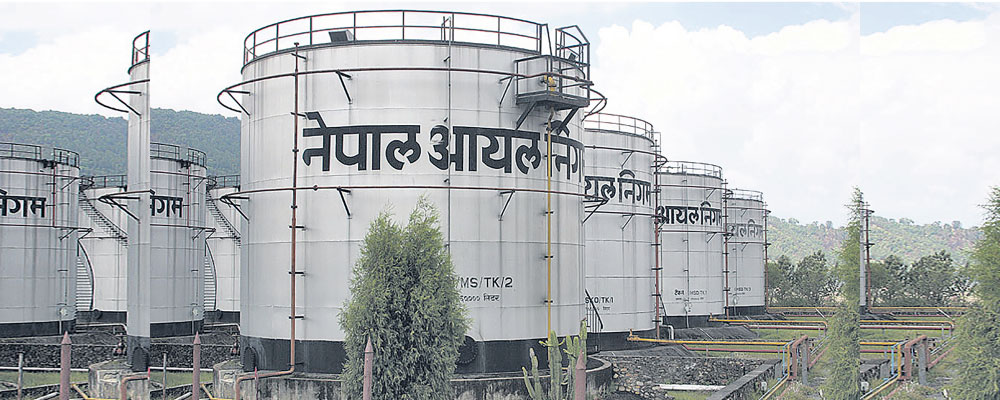
However, Nepal Oil Corporation (NOC) has maintained domestic fuel prices at the elevated levels introduced when international crude prices had surged to nearly US$119.50 per barrel. As a result, petrol continues to sell at Rs 217 per litre, compared to Rs 157 before the Middle East crisis, while diesel remains at Rs 237 per litre, up from Rs 167 in mid-March.
Speaking during discussions on the Finance Bill 2026 in the House of Representatives, Finance Minister Dr. Swarnim Wagle acknowledged that domestic fuel prices are expected to decline as geopolitical tensions subside. However, he said the adjustment would not be immediate, explaining that Nepal imports petroleum products from the Indian Oil Corporation (IOC) and that price revisions require procedural processing before the benefits of lower international prices can be passed on to consumers.
The finance minister also stated that the government has already reduced customs duties on petrol, diesel and kerosene by 50 percent, while lowering the infrastructure development tax on petrol and diesel in an effort to cushion consumers from the impact of recent fuel price increases.
Despite these tax reductions, retail fuel prices have remained unchanged. Consumer groups argue that the benefits have not reached the public because Nepal Oil Corporation continues to retain higher prices to recover financial losses accumulated during the period of elevated global oil prices.
According to an NOC official, the corporation has exhausted Rs 19 billion from its Price Stabilization Fund and Rs 17 billion in accumulated profits. In addition, it has spent approximately Rs 36 billion during the current fiscal year to bridge the gap between higher import costs and lower domestic selling prices, leaving the state-owned company under significant financial pressure.
Economists note that a reduction in petroleum prices could provide broad relief to the economy. Lower fuel costs would reduce transportation expenses, ease production costs for industries, lower aviation operating costs, and help moderate inflationary pressures affecting consumers and businesses alike.
While the government maintains that fuel prices will eventually be revised downward, the continued delay has fueled public debate over Nepal’s fuel pricing mechanism and the transparency of decisions taken by the state-owned petroleum supplier.