
CEO Tab
  • Home
  • Prime News
  • International Market
  • Special Report
  • Corporate
  • Opinion
  • Next Gen
  • Entertainment
No Result
View All Result
CEO Tab
  • Home
  • Prime News
  • International Market
  • Special Report
  • Corporate
  • Opinion
  • Next Gen
  • Entertainment
No Result
View All Result
CEO Tab
No Result
View All Result
Home Prime News

Bankers Seek Regulatory Reforms to Generate Income from Non-Banking Assets

CEO Tab by CEO Tab
June 28, 2026
in Prime News
0
Bankers Seek Regulatory Reforms to Generate Income from Non-Banking Assets
75
SHARES
1.3k
VIEWS
Share on FacebookShare on Twitter

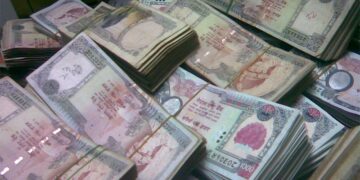
Nepal’s commercial banks have urged Nepal Rastra Bank (NRB) to introduce regulatory reforms allowing banks and financial institutions (BFIs) to lease or rent out non-banking assets (NBAs), arguing that a growing stock of unsold collateral has become a major financial burden amid the prolonged economic slowdown.

You might also like

Nepal’s Consumer Inflation Surges to 6.37 Percent in Mid-October

Nepal’s Foreign Currency Reserves Rise 6.8% to Rs 4.16 Trillion

Nepal Receives Rs 703.70 Billion in Remittances in First Three Months, Up 27.2 Percent

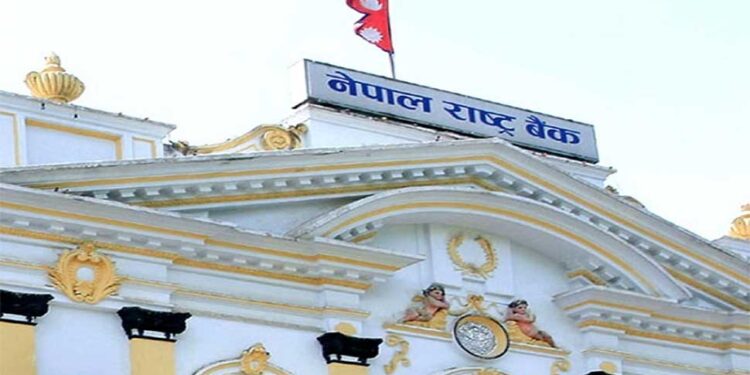
Under the current NRB regulations, BFIs are prohibited from generating income from fixed assets acquired after confiscating collateral from defaulting borrowers. The Nepal Bankers’ Association (NBA) has requested the central bank to amend the existing provisions so that banks can earn rental or lease income from such properties until they are sold.

Bankers have also expressed dissatisfaction over the central bank’s stringent loan-loss provisioning requirements. They argue that NRB has yet to implement its commitment, announced in the Monetary Policy for Fiscal Year 2025/26, to review the existing loan classification and provisioning framework.

According to NRB data, the value of non-banking assets held by Nepal’s commercial banks increased by Rs 7.50 billion, or 19.51 percent, during the first 10 months of the current fiscal year. As a result, the total value of these assets has climbed from Rs 38.48 billion to Rs 45.99 billion.

Non-banking assets primarily consist of land, buildings, and other properties acquired by banks after borrowers fail to repay loans. Financial institutions typically dispose of these assets through public auctions to recover outstanding loans and reverse provisions made against non-performing assets.

However, the prolonged economic slowdown has weakened the real estate market, making it increasingly difficult for banks to sell confiscated properties. As these assets remain idle and generate no income, they continue to tie up capital that could otherwise be deployed for productive lending.

The steady rise in non-banking assets also reflects broader challenges facing Nepal’s banking sector. Despite a significant decline in lending interest rates and abundant liquidity, credit demand has remained subdued, while banks continue to struggle with recovering overdue loans.

In addition to seeking greater flexibility in managing non-banking assets, the NBA has proposed several regulatory reforms. Bankers have urged the NRB to revise the methodology used to calculate the base interest rate, arguing that the existing formula no longer reflects prevailing market conditions.

They have also called on the central bank to reduce the mandatory deprived sector lending requirement from 5 percent to 4 percent, contending that the current threshold places additional pressure on banks at a time of weak credit demand.

Furthermore, the association has requested that banks be permitted to revise the risk premium on loans during the loan tenure. Under existing regulations, banks are generally unable to adjust the premium even when a borrower’s credit profile improves or deteriorates over time. Bankers argue that allowing such adjustments would enable BFIs to price credit more accurately according to changing borrower risk.

The proposals come as Nepal’s banking industry grapples with rising non-performing assets, sluggish credit expansion, and excess liquidity, prompting calls for regulatory changes to improve financial sector efficiency and profitability.


Share30Tweet19
CEO Tab

CEO Tab

Recommended For You

Nepal’s Consumer Inflation Surges to 6.37 Percent in Mid-October

by CEO Tab
November 20, 2026
0
Nepal’s Consumer Inflation Surges to 6.37 Percent in Mid-October

Consumer price inflation in Nepal surged to 6.37 percent in mid-October of the current fiscal year, more than four times the 1.47 percent recorded during the same period...

Read more

Nepal’s Foreign Currency Reserves Rise 6.8% to Rs 4.16 Trillion

by CEO Tab
November 20, 2026
0
Nepal’s Foreign Currency Reserves Rise 6.8% to Rs 4.16 Trillion

Nepal’s foreign currency reserves increased by 6.8 percent to reach Rs 4.16 trillion as of mid-October in the current fiscal year, strengthening the country’s capacity to finance imports....

Read more

Nepal Receives Rs 703.70 Billion in Remittances in First Three Months, Up 27.2 Percent

by CEO Tab
November 20, 2026
0
Nepal Receives Rs 703.70 Billion in Remittances in First Three Months, Up 27.2 Percent

Nepal received remittances worth Rs 703.70 billion in the first three months of the current fiscal year, marking a 27.2 percent increase compared to the same period last...

Read more

NEA to Sign Power Purchase Agreements for 1,000 MW of Government-Owned Projects

by CEO Tab
November 20, 2026
0
NEA to Sign Power Purchase Agreements for 1,000 MW of Government-Owned Projects

The Nepal Electricity Authority (NEA) is preparing to sign Power Purchase Agreements (PPAs) for around 1,000 MW of electricity generated by government-owned companies, paving the way for faster...

Read more

NEA Secures Approval to Import 350 MW of Electricity from India for Winter

by CEO Tab
November 18, 2026
0
NEA Secures Approval to Import 350 MW of Electricity from India for Winter

The Nepal Electricity Authority (NEA) has received approval to import 350 MW of electricity from India to meet domestic demand during the upcoming winter season. India’s Central Electricity...

Read more
Next Post
Nepal Celebrates National Paddy Day with Traditional Curd and Beaten Rice Amid Delayed Monsoon

Nepal Celebrates National Paddy Day with Traditional Curd and Beaten Rice Amid Delayed Monsoon

Browse by Category

  • Corporate
  • Entertainment
  • Featured
  • International
  • Major Story
  • Next Gen
  • Opinion
  • Prime News
  • Special Report
  • Tete – A – Tete

EDITOR

Manish Raj Poudel
info@ceotab.com
9841317747


PUBLISHED BY

Welcome Group
www.welcomeadnepal.com

Publisher

www.ceotab.com is a premium news portal being run by Welcome Group. The website features quality business/economic news contents,  in-depth profiles of companies, stories of struggle and success of entrepreneurs, articles that assess various dimensions of  the commerce, trade and economy.

Editor

Manish Raj Poudel

info@ceotab.com

9841317747

Sub-Editor

Riza Poudel

poudelriza@gmail.com

Archives

© 2023 CEO Tab. All rights reserved.

No Result
View All Result
  • Home
  • Prime News
  • International Market
  • Special Report
  • Corporate
  • Opinion
  • Next Gen
  • Entertainment

© 2023 CEO Tab. All rights reserved.