
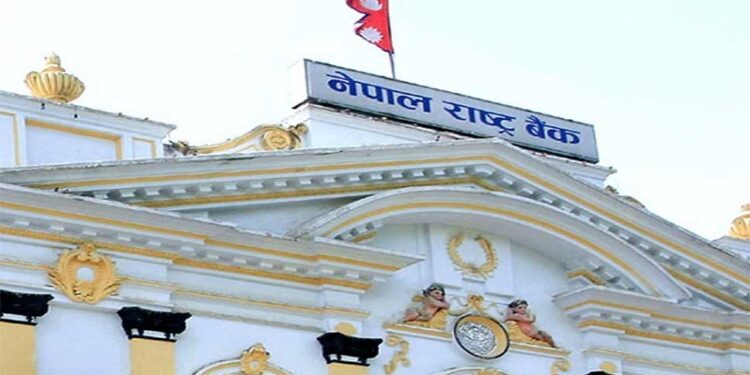
As the Nepal Rastra Bank (NRB) prepares the Monetary Policy for Fiscal Year 2026/27, banking experts and private sector representatives have called on the central bank to prioritize financial sector stability, reform credit classification rules and improve the management of non-banking assets to restore business confidence and stimulate economic activity.
Speaking at a discussion organized by the Society of Economic Journalists Nepal (SEJON), banking sector expert Anal Raj Bhattarai said Nepal’s economy is currently facing a structural challenge, with banks holding ample liquidity while demand for credit from the private sector remains weak.
“The upcoming monetary policy should focus on resolving structural problems in the banking sector rather than merely reducing or increasing interest rates,” Bhattarai said.
Nepal’s banking system has been grappling with persistent excess liquidity over the past few years as deposit growth has significantly outpaced loan expansion despite continuous cuts in interest rates. At the same time, commercial banks have witnessed a steady rise in non-banking assets as loan defaults continue to increase amid the prolonged economic slowdown.
President of the Confederation of Banks and Financial Institutions Nepal (CBFIN), Prachanda Bahadur Shrestha, said even financially sound businesses have struggled to repay loans due to shrinking cash flows across various sectors of the economy. He stressed that the upcoming monetary policy should address the banking sector’s underlying challenges while maintaining a balance between financial stability and economic recovery.
Experts participating in the discussion also urged the central bank to adopt more practical and risk-based approaches to loan classification, provisioning requirements and the management of non-banking assets. They noted that several South Asian countries had introduced regulatory flexibility during periods of economic stress to support financial institutions and facilitate economic recovery.
Similarly, Santosh Koirala, President of the Nepal Bankers’ Association (NBA), called for a review of the existing non-performing asset (NPA) classification and loan-loss provisioning framework. He argued that the current requirement to maintain provisions of 5 percent within one month, 15 percent within three months, 50 percent within six months and 100 percent within one year places excessive pressure on both banks and borrowers.
Representing the private sector, Anand Bagaria, Executive Director of Nimbus, said the key issue facing businesses today is not the level of interest rates but the lack of policy stability and investor confidence.
“Entrepreneurs have invested even when lending rates were 13 to 14 percent. What concerns businesses more is policy uncertainty, which increases investment risks after projects have already begun,” Bagaria said.
Responding to the concerns, NRB Deputy Governor Kiran Pandit said the central bank’s upcoming monetary policy would seek to support the government’s economic growth objectives while safeguarding financial stability.
He added that emerging issues such as fintech, open banking, digital transaction monitoring and technology-related risk management would receive greater emphasis in the new monetary policy and regulatory framework as Nepal’s financial system continues to undergo rapid digital transformation.