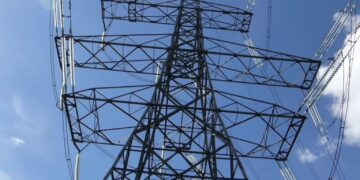

Kathmandu: In a landmark development for Nepal’s energy sector, the private sector has successfully completed the 220 kV Markichok–Bharatpur transmission line under the Marsyangdi Corridor, marking the first time private hydropower developers have constructed a high-voltage transmission line in the country.
The 28-kilometre double-circuit transmission line, completed in just 19 months, ends a project that had remained largely stalled for nearly seven years under its previous contractor. Energy experts have described the project as a significant milestone in Nepal’s power infrastructure development and a successful example of public-private collaboration.
The Nepal Electricity Authority (NEA) had originally awarded the construction contract to China’s Pingao Group in November 2017. However, despite seven years of work, the contractor had completed the foundations for only 35 of the planned 84 transmission towers and erected just 10 towers, delaying the evacuation of electricity from several hydropower projects in the Marsyangdi Corridor.
Frustrated by repeated delays, the NEA transferred responsibility for the remaining construction works to Nepal’s private hydropower developers on November 20, 2024. Seven hydropower companies operating in the corridor subsequently joined hands to finance and complete the long-delayed infrastructure.
The participating projects include the 54 MW Super Dordi Hydropower Project, 12 MW Dordi Khola-1, 27 MW Dordi Khola, 30 MW Nyadi, 8.6 MW Chepe Khola, and 9.05 MW Super Chepe Khola, among others. Together, they awarded the construction contract to Viva Construction and Engineering Concern and Bhugol Infrastructure Company with an investment of approximately Rs 49.69 million.
To coordinate the project, the developers formed a facilitation committee led by Uttam Blon Lama, then Vice-President and now Senior Vice-President of the Independent Power Producers’ Association Nepal (IPPAN), along with representatives from other hydropower companies. The committee worked closely with contractors and stakeholders to resolve technical, administrative and local-level challenges that had delayed the project for years.
Following the handover, construction progressed rapidly. All 84 tower foundations were completed, while 78 transmission towers were erected before the line entered the final testing phase. According to the NEA, the transmission line is now physically complete, with testing having begun on Tuesday. Commercial operation will commence after successful completion of system tests.
The transmission line connects the New Marsyangdi Substation at Markichok in Aanbukhaireni, Tanahun, to the New Bharatpur Substation at Aaptari, Bharatpur Metropolitan City, Chitwan. Built with financial support from the European Investment Bank alongside joint investment from the Government of Nepal and the NEA, the project is expected to play a crucial role in strengthening the national transmission network.
The new infrastructure will allow electricity generated by hydropower projects along the Marsyangdi, Dordi and Trishuli river systems to be integrated into the national grid, preventing the loss of electricity that previously could not be transmitted due to inadequate evacuation infrastructure.
Speaking after the completion of the project, committee coordinator Uttam Blon Lama said the initiative demonstrates the capability of Nepal’s private sector to deliver critical national infrastructure when provided with the opportunity. He noted that hydropower investors, who had suffered financial losses because completed projects were unable to evacuate electricity, succeeded in completing a project within one and a half years that had remained stalled for nearly seven years.
Energy analysts view the successful completion of the Markichok–Bharatpur transmission line as a turning point for Nepal’s electricity sector. The project not only eases a major transmission bottleneck but also establishes a new model for private sector participation in transmission infrastructure, potentially accelerating future investments in Nepal’s rapidly expanding hydropower industry and supporting increased domestic consumption as well as cross-border electricity exports.