

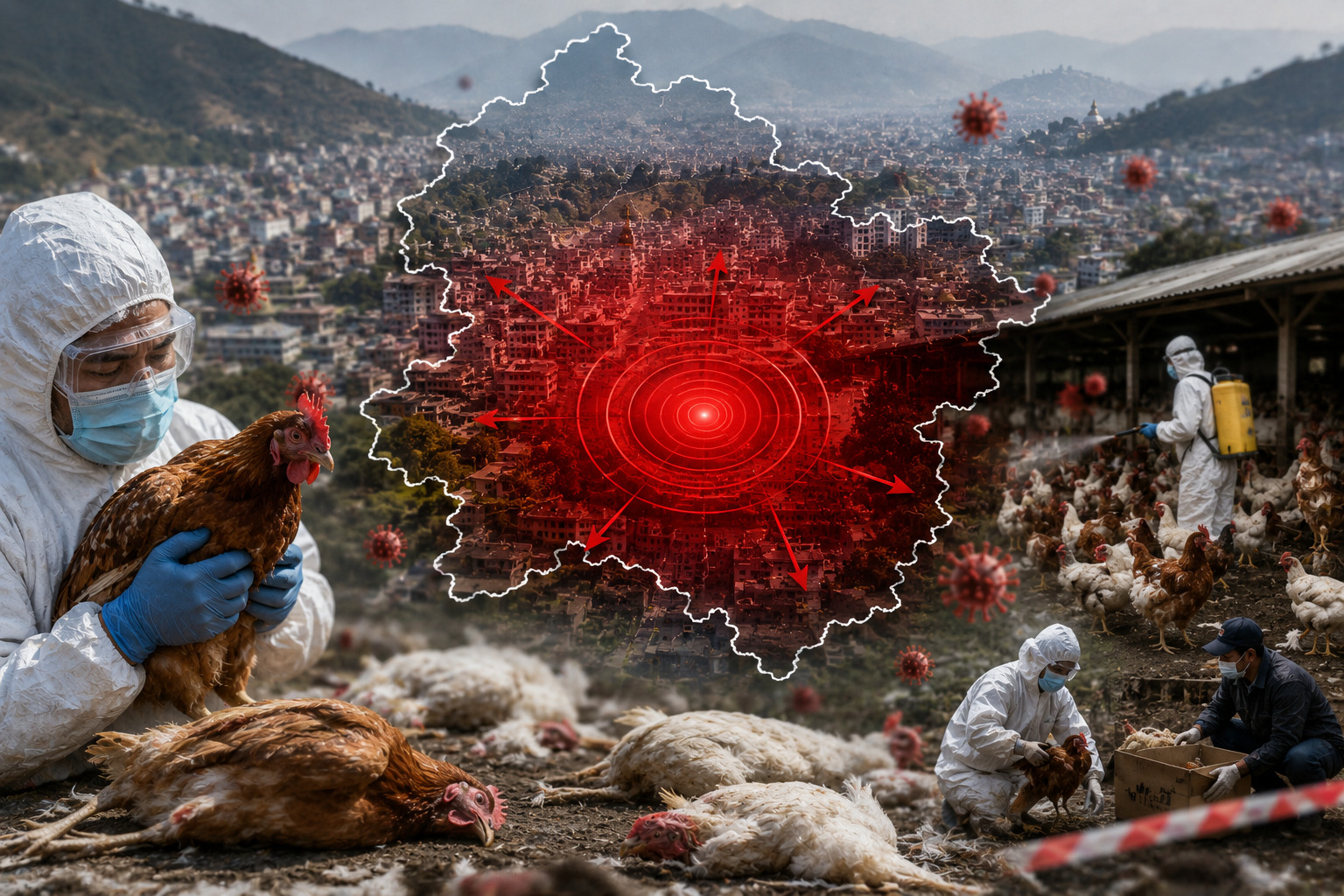
Bird flu has been confirmed in 82 locations across 11 districts of Nepal, with the Kathmandu Valley emerging as the country’s main hotspot, according to the Department of Animal Services (DoAS).
In a press statement issued on Monday, DoAS Director General Umesh Dahal urged the public and poultry farmers to remain alert as outbreaks of avian influenza continue to spread across various parts of the country.
Infection Spread Since March
According to the department, bird flu was first detected in Morang district during the third week of March. Since then, the disease has spread to the following districts:
- Jhapa
- Morang
- Sunsari
- Mahottari
- Bara
- Chitwan
- Nawalparasi
- Kathmandu
- Lalitpur
- Bhaktapur
- Kavrepalanchok
The disease has now been confirmed in all three districts of the Kathmandu Valley.
Central Zoo Closure
A recent outbreak at the Central Zoo in Jawalakhel, Lalitpur, prompted authorities to temporarily close the facility to visitors as a precautionary measure.
Massive Culling and Destruction
Over the past four months, containment efforts have resulted in the destruction of:
- 569,858 infected birds;
- 989,313 eggs; and
- 195,485 kilograms of poultry feed.
Officials said that while the outbreak has largely been brought under control in the Koshi Province, the Kathmandu Valley has now become the epicenter of the disease.
Biosecurity Measures Strengthened
The Department of Animal Services has called on poultry farmers to strengthen biosecurity practices and recommended:
- Avoiding the use of old paper egg trays and crates;
- Thoroughly disinfecting vehicles entering poultry farms;
- Keeping domestic birds confined;
- Preventing contact between poultry and wild birds, including crows; and
- Ensuring poultry feed remains protected from contamination.
In response to the growing number of cases, veterinary certification has been made mandatory for the transportation of birds and bird products.
Other Poultry Diseases Also Reported
Besides highly pathogenic avian influenza, authorities have also reported cases of:
- Low pathogenic avian influenza;
- Newcastle disease (Ranikhet disease); and
- E. coli infections.
These diseases have also contributed to bird mortality, prompting the department to advise poultry farmers to maintain regular vaccination schedules.
Public Urged to Report Suspected Cases
The DoAS has appealed to the public to immediately inform the nearest animal service office if birds become ill or die unexpectedly.
Officials emphasized that timely reporting, strict biosecurity measures, and cooperation from farmers and the public are essential to containing the spread of bird flu and protecting Nepal’s poultry industry.