
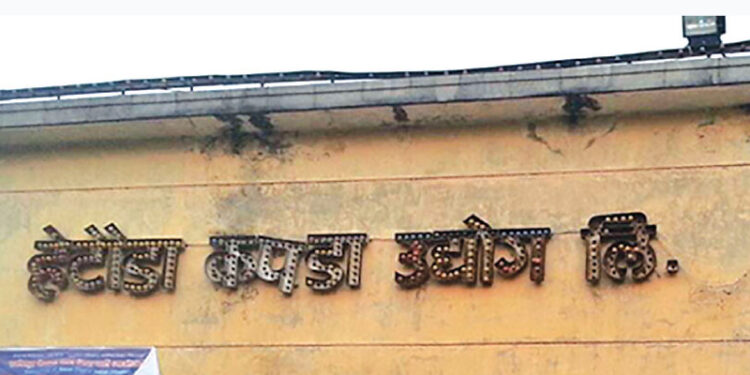
The government has accelerated efforts to revive the long-defunct Hetauda Textile Industry, with field inspections and technical assessments gaining momentum as authorities move ahead with plans to restart the state-owned factory.

Located within the Hetauda Industrial Estate, the textile factory was established in 1975 and began production in 1978, but operations ceased in 2000. Although several attempts were made over the years to revive the industry, none proved successful.
According to Himalaya Bhandari, Information Officer at the Hetauda office of Industrial District Management Limited (IDML), government agencies have become increasingly active this year amid renewed interest in bringing the factory back into operation.
Bhandari noted that the Hetauda Textile Industry was originally linked with the Butwal Yarn Factory and a cotton cultivation project in Nepalgunj, Banke, which were launched around the same period. Following the closure of the textile factory, those supporting industries also gradually shut down.
He stated that the factory could be restarted relatively quickly because much of its machinery remains functional and would require only routine repairs.
The Office of the Prime Minister and Council of Ministers has taken the lead in advancing the revival initiative. Industry, Commerce and Supplies Minister Gauri Kumari Yadav has already conducted an on-site inspection of the facility. A team led by Hetauda Sub-Metropolitan City Mayor Meena Kumari Lama and the Makwanpur Chief District Officer has also visited the site to assess its current condition.
While responding to lawmakers during discussions on the FY 2026/27 budget in the House of Representatives, Minister Yadav announced that the government intends to restart the Hetauda Textile Industry within the current fiscal year. She stated that among Nepal’s closed and financially distressed state-owned enterprises, the Hetauda Textile Industry would be the first to resume operations.
The government is also planning to revive the Butwal Yarn Factory and cotton cultivation programs to support the textile sector and create an integrated production chain.
Since 2018, the factory premises have been occupied by the Armed Police Force’s No. 14 Battalion. Before that, only two employees were assigned to guard the facility, and the area had reportedly become vulnerable to illegal activities. Authorities say the premises are now secure.
With renewed government interest, personnel from the Armed Police Force, Nepal Army, and Nepal Police have jointly conducted cleanup and maintenance activities at the site.
Officials believe that reopening the factory could help revive Nepal’s domestic textile industry, create employment opportunities, and reduce dependence on imported textile products.