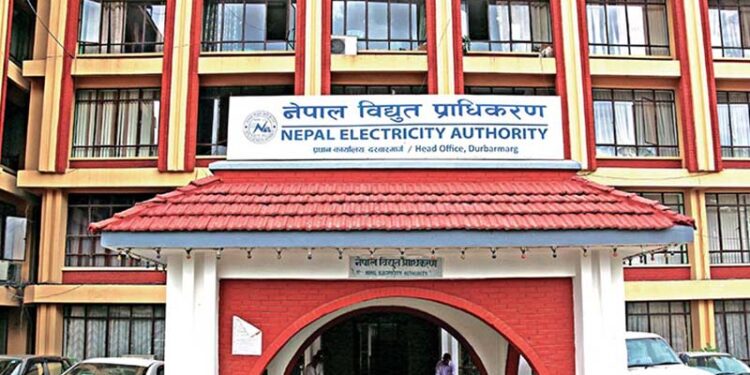
Kathmandu: The Nepal Electricity Authority (NEA) has initiated preparations to extend the Required Commercial Operation Date (RCOD) for hydropower projects that are under construction but have been unable to begin commercial electricity generation within the deadline specified in their Power Purchase Agreements (PPAs).

The move comes as the NEA introduces a new classification framework aimed at evaluating delayed projects based on their construction progress, regulatory compliance, and reasons for delay before deciding on deadline extensions.
Four-Tier Classification System Introduced
The NEA’s Board of Directors has approved a policy to categorize hydropower and solar projects into four groups to ensure a transparent and objective approach to granting RCOD extensions.
Announcing the decision, Energy, Water Resources and Irrigation Minister Biraj Bhakta Shrestha said the new online guidelines will assess projects according to their implementation status, compliance with PPA obligations, and overall progress.
How the Projects Will Be Classified
Under the new framework:
- Group A includes projects whose RCOD has not yet expired and that have fulfilled major obligations, including obtaining generation licenses, securing financial closure, and acquiring the required land.
- Group B covers projects delayed primarily due to factors beyond developers’ control, such as delays in NEA’s transmission line or substation construction. It also includes projects whose deadlines have expired but have achieved more than 25 percent physical progress. These projects will be closely monitored by the NEA’s Electricity Trading Department.
- Group C consists of projects that failed to meet key milestones, including obtaining licenses or financial closure on time, or those with less than 25 percent construction progress when their RCOD expired.
- Group D includes projects that failed to meet contractual obligations altogether or whose survey or generation licenses have already been cancelled after missing the deadline.
Progress Assessment Criteria
The NEA has also established project-specific evaluation criteria.
For hydropower projects, physical progress will be measured based on the construction of critical infrastructure, including headworks, tunnels, and powerhouses.
For solar energy projects, assessment will focus on factors such as land acquisition, solar panel procurement agreements, issuance of letters of credit, and installation of mounting structures.
Industry Welcomes Flexible Approach
Hydropower developers have long called for greater flexibility in RCOD deadlines, arguing that many genuine projects have faced delays due to transmission bottlenecks, regulatory approvals, land acquisition issues, and other factors beyond their control.
At the same time, industry stakeholders have stressed that inactive or non-serious developers should not receive similar concessions.
The NEA believes the new classification system will improve transparency, strengthen project accountability, and accelerate the connection of completed power projects to the national grid.
Over 1,290 MW Awaiting Deadline Extension
According to the NEA, 30 hydropower projects with a combined installed capacity of approximately 1,292 megawatts (MW) have already applied for RCOD extensions.
The projects are at varying stages of development, with physical progress ranging from as little as 4 percent to projects that are fully completed but awaiting commercial operation.
Officials expect the new framework to facilitate timely decisions on extension requests while supporting Nepal’s efforts to expand electricity generation and improve energy security.