
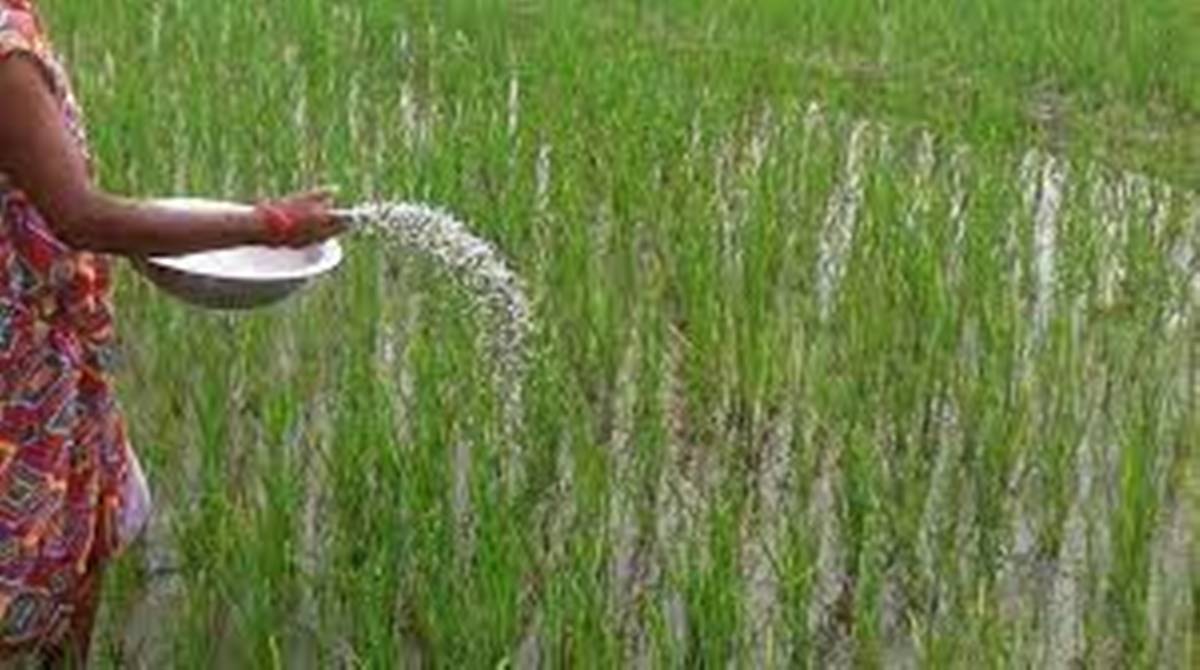
Nepal imported chemical fertilizers worth nearly Rs 49.83 billion during the first 11 months of the current fiscal year, but thousands of farmers across the country continue to struggle to obtain fertilizers at the time they need them most.

Data from the Department of Customs show that large quantities of urea, diammonium phosphate (DAP), and potash fertilizers entered the country by the end of the review period. Despite the massive imports and billions of rupees spent on subsidies, fertilizer shortages have once again emerged during the peak paddy transplantation season, exposing persistent weaknesses in Nepal’s agricultural supply system.
According to the Ministry of Agriculture and Livestock Development, Nepal requires around 700,000 metric tons of chemical fertilizers annually. Demand has been increasing steadily with the expansion of paddy, maize, wheat, and vegetable cultivation across the country.
Customs statistics reveal that Nepal imported more than Rs 35 billion worth of urea, over Rs 12 billion worth of DAP, and nearly Rs 2 billion worth of potash during the first 11 months of the fiscal year. Urea accounted for the largest share of both imports and consumption.
The government supplies fertilizers to farmers at subsidized rates through Agricultural Inputs Company Limited and Salt Trading Corporation. However, despite these arrangements, farmers in several districts report difficulties accessing fertilizers during critical planting periods.
Agriculture experts say the recurring problem is not merely a matter of import volume but one of distribution and supply management. Delays in international procurement processes, transportation bottlenecks, storage limitations, and weak coordination between central warehouses and local distribution centers have repeatedly affected timely delivery.
“The challenge is not only bringing fertilizer into the country,” said an agriculture sector observer. “The real issue is ensuring that fertilizer reaches farmers in the right place and at the right time.”
Experts note that fertilizer demand peaks simultaneously across the country during the planting season. As a result, even when adequate stock exists at central warehouses, delays in transportation and local distribution often create shortages in farming communities.
The situation is further complicated by allegations of black marketing, hoarding, and informal cross-border leakage of fertilizers in some areas. Stakeholders argue that these practices distort supply and make access more difficult for genuine farmers.
The government has allocated more than Rs 30 billion in subsidies for fertilizer procurement in the current fiscal year. However, rising international prices, increased transportation costs, and fluctuations in the exchange rate have pushed up the overall cost of imports.
The recurring shortages have also revived debate over Nepal’s long-discussed plan to establish a domestic fertilizer industry. Although various feasibility studies have been conducted over the years, no fertilizer production plant has yet been established in the country.
Industry experts cite several challenges, including the absence of natural gas resources, uncertainty regarding raw material supply, high investment requirements, and concerns that domestic production could be more expensive than imports. Previous discussions on establishing fertilizer plants based on natural gas or green hydrogen technology have also failed to move beyond the planning stage.
As Nepal continues to spend tens of billions of rupees annually on fertilizer imports, agricultural experts argue that reforms in procurement planning, storage management, and distribution systems are urgently needed. Without such improvements, they warn that farmers will likely continue facing shortages during critical farming seasons despite record levels of fertilizer imports.
For many farmers preparing their fields for paddy cultivation, the issue remains simple: the availability of fertilizer matters more than the amount imported. Until the supply chain functions efficiently, they say, the annual cycle of shortages is unlikely to end.