
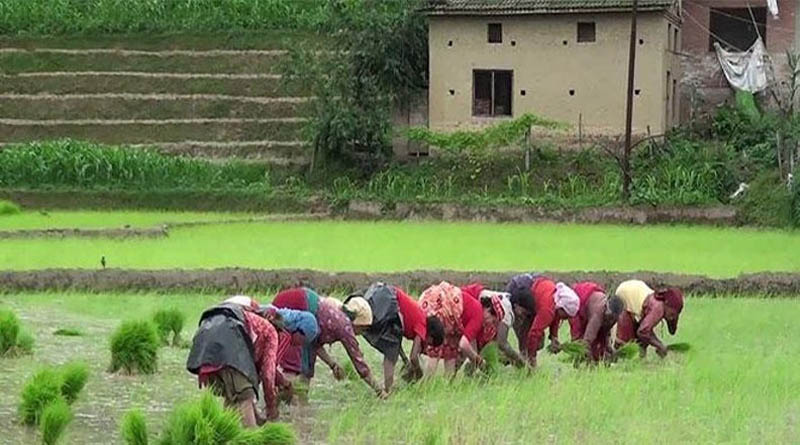
Delayed monsoon rainfall has significantly disrupted this year’s paddy plantation across Nepal, with only around 10 percent of the country’s cultivable rice fields planted as of Monday, raising concerns over agricultural production and food security.
According to the Department of Agriculture, paddy has been transplanted on only 137,000 hectares of land so far, out of the country’s total 1.381 million hectares designated for rice cultivation. Although the overall planted area is 0.4 percent higher than during the same period of the previous fiscal year, plantation progress remains considerably behind the seasonal schedule due to insufficient rainfall.
Provincial data shows significant disparities in plantation progress. Karnali Province has recorded the highest plantation rate, with 22.8 percent of its paddy fields already planted. In contrast, Bagmati Province has completed plantation on just 2.3 percent of its cultivable land, while Madhesh Province, Nepal’s key rice-producing region, has managed to plant only around five percent of its paddy fields.
Agriculture officials attribute the slow progress primarily to the delayed onset of the monsoon, which has postponed land preparation and transplanting activities in many districts. Farmers in several parts of the country continue to wait for adequate rainfall before beginning plantation.
The sluggish progress is particularly concerning for the Terai region, which contributes nearly 70 percent of Nepal’s total rice production. Any prolonged delay in plantation could reduce crop yields, affect rural incomes, and increase pressure on the country’s food supply.
Officials remain hopeful that plantation activities will accelerate once monsoon rains become more widespread in the coming days. However, agricultural experts caution that continued rainfall delays could adversely affect overall paddy production and the nation’s agricultural growth during the current fiscal year.