
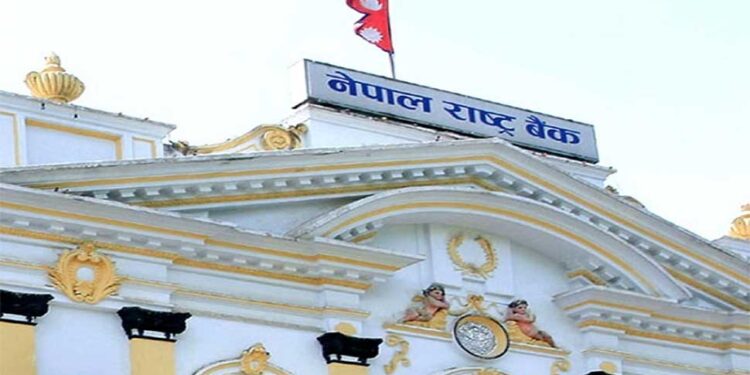
Nepal Rastra Bank (NRB) has said that the Standing Deposit Facility (SDF), introduced as a monetary policy instrument two years ago, has proven effective in maintaining the floor of the interest rate corridor amid falling interest rates in the country’s banking system.

The central bank’s assessment comes at a time when it has faced criticism over its inability to manage excess liquidity in the financial sector. For the past several years, banks and financial institutions have struggled to deploy surplus loanable funds, leading to a sharp decline in interest rates.
NRB introduced the SDF mechanism in February 2024, allowing banks and financial institutions to park their excess liquidity with the central bank and earn a guaranteed interest rate of three percent. The mechanism was designed to absorb surplus liquidity, stabilize interbank interest rates, and provide commercial banks with a minimum return on idle funds.
NRB Study Highlights Positive Impact
According to a study conducted by NRB, the implementation of the SDF represents a significant turning point in Nepal’s monetary policy framework rather than a mere administrative adjustment.
The report, led by NRB Assistant Director Victor Kumar Sapkota, states that before the introduction of the SDF, interbank interest rates often fell sharply whenever excess liquidity accumulated, creating uncertainty in the financial market. The availability of the daily deposit facility has enabled banks and financial institutions to conduct transactions and plan more confidently, as rates now remain within the prescribed corridor.
Improved Monetary Transmission
Prior to the SDF, the wide gap between the bank rate and interbank rate had raised concerns about the effectiveness of monetary transmission. With the daily facility in place, the interest rates set by the central bank have begun to exert a more visible influence on market behavior.
According to the report, this improved alignment between policy rates and market rates has strengthened the transmission of monetary policy, which is considered essential for maintaining macroeconomic stability and a healthy financial system.
Operational Challenges Remain
Despite its positive impact, the study notes that the SDF is not continuously accessible and still faces operational challenges. Heavy compliance requirements and manual operating procedures mean that banks and financial institutions cannot always deposit surplus liquidity immediately when it becomes available.
Nevertheless, the report concludes that SDF operations in Nepal have played a crucial role in supporting and maintaining the interest rate floor. To ensure a more accurate assessment, the study excluded the initial year following the policy’s introduction, allowing time for banks and financial institutions to adjust to the new mechanism.