
GIZ Nepal, a German development agency working in Nepal, has mobilized a total investment of 2.13 million euros in collaboration with the state-owned Alternative Energy Promotion Centre (AEPC) for renewable energy and energy-efficiency projects across the country over the past three years.
The funds were mobilized under the Renewable Energy and Energy Efficiency Programme – Green Recovery and Empowerment with Energy in Nepal (REEEP-GREEN). This amount includes private-sector investment leveraged at a ratio of 1:3.74 in renewable energy projects. REEEP-GREEN is a joint initiative financed by the European Union and the German Federal Ministry for Economic Cooperation and Development (BMZ).
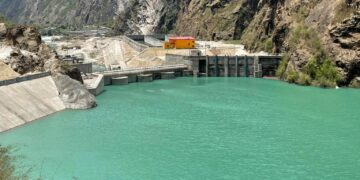
According to GIZ Nepal, the projects have enabled around 60,000 people to access affordable renewable energy technologies and supported private industries in adopting energy-efficiency measures. The initiative is expected to save more than 62,008 megawatt-hours (MWh) of energy annually within just two years. The programme promoted the use of induction cookstoves, biogas systems, solar water pumps, micro-hydropower rehabilitation and grid interconnection, e-rickshaws, and other energy-efficient solutions.
Financial resources mobilized through the Sustainable Energy Challenge Fund (SECF) supported the deployment of 14 electric vehicle (EV) charging station projects across 19 locations, with individual system capacities ranging from 140 kW to 560 kW. These projects have significantly contributed to expanding Nepal’s EV charging infrastructure and advancing the decarbonization of the transport sector.
The statement further noted that energy efficiency is recognized as the most cost-effective pathway to reduce emissions, strengthen energy security, and support Nepal’s long-term low-carbon development goals. In this context, the SECF has played an important role in promoting market-based clean energy solutions and inclusive energy access.
Speaking at a programme organized by GIZ Nepal on Friday, participants emphasized that the fund has been instrumental in catalyzing investment, transforming energy service delivery, fostering innovation, strengthening public–private partnerships, and supporting national priorities, including NDC 3.0, the Energy Development Roadmap 2081, and the Sustainable Development Goals (SDGs).