
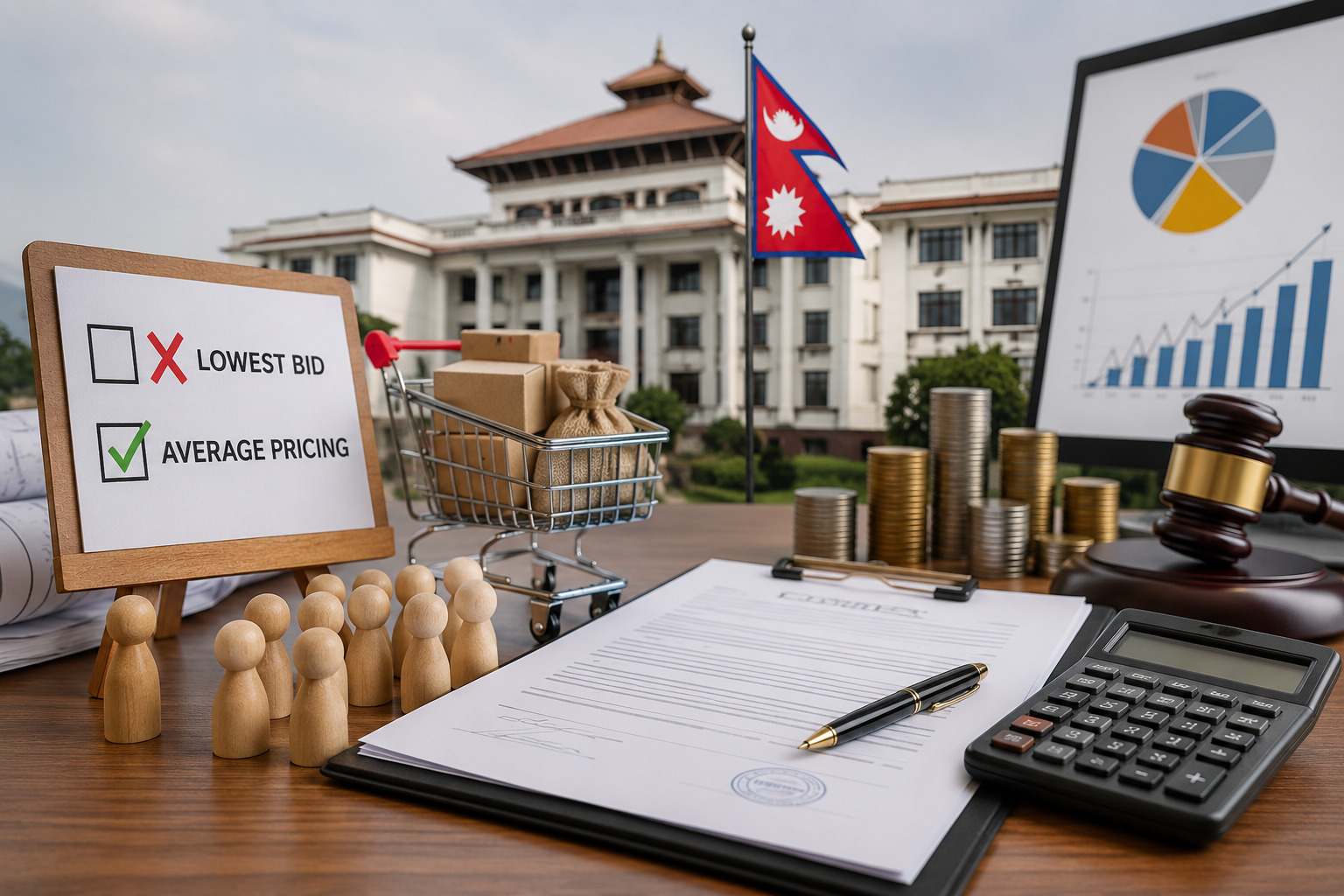
Kathmandu: Nepal has officially ended the long-standing practice of awarding public contracts solely to the lowest bidder, replacing it with a new procurement approach that will evaluate bids based on average pricing in a bid to improve project quality, reduce delays, and strengthen accountability.

The reform comes through the Second Amendment to the Public Procurement Act, 2007, recently endorsed by Parliament. The government says the revised law is designed to make public procurement more transparent, efficient, and practical while addressing chronic problems that have plagued infrastructure projects for years.
Under the previous procurement system, public contracts were typically awarded to the bidder offering the lowest price. While intended to ensure cost efficiency, the policy often encouraged contractors to submit unrealistically low bids—sometimes below actual construction costs—to secure contracts. This frequently resulted in poor-quality work, repeated deadline extensions, cost overruns, and abandoned projects.
Government officials believe the new average-price evaluation model will discourage aggressive underbidding and encourage contractors to submit realistic and financially viable proposals.
Construction Sector Welcomes Reform
The Federation of Contractors’ Associations of Nepal (FCAN) has welcomed the amendment, describing it as one of the most significant procurement reforms in recent years.
Federation General Secretary Shiv Hari Ghimire said the abolition of the lowest-bid system is expected to reduce unhealthy competition among contractors and improve the overall quality of infrastructure development.
“The government’s amendment is a welcome step. We expect it to address most of the long-standing challenges facing Nepal’s construction sector,” Ghimire said.
According to the federation, contractors have often been compelled to quote unsustainably low prices to win projects, only to face financial difficulties later, resulting in delays, disputes, and compromised construction quality.
Stricter Rules Before Tendering
The amended law introduces several measures aimed at improving project preparation before procurement begins.
Public agencies will no longer be permitted to invite bids without first securing budget allocations or confirming financing sources. Likewise, land acquisition, compensation payments, site clearance, and environmental approvals must all be completed before tenders are issued.
The government believes these provisions will significantly reduce delays caused by unresolved land disputes, funding shortages, and administrative bottlenecks after contracts have already been awarded.
Greater Accountability and Incentives
The amendment also standardizes the preparation of project cost estimates by requiring all estimates to follow government-approved standards, improving consistency and accuracy in budgeting.
In addition, the law clearly defines the responsibilities of public agencies, contractors, suppliers, and consultants involved in project implementation.
Government employees who complete projects on schedule while maintaining quality standards will become eligible for incentives, bonuses, and other rewards. Contractors delivering quality work within the stipulated timeframe will also receive incentives and official recognition.
Among other key provisions, the revised law:
- Caps the performance guarantee requirement at 5 percent.
- Recognizes the combined qualifications of companies that merge.
- Shortens bid submission deadlines to expedite procurement.
- Makes decisions of the Public Procurement Review Committee legally binding.
Implementation Will Be Key
Construction experts say replacing the lowest-bid model could significantly improve Nepal’s infrastructure sector by reducing unrealistic pricing and encouraging more sustainable competition.
However, they caution that the success of the reform will depend entirely on its implementation.
Experts argue that the methodology used to calculate the “average price” must be transparent, objective, and scientifically sound to prevent manipulation or favoritism. They also stress that contract awards should not rely solely on price but should incorporate technical expertise, financial capacity, previous project performance, and implementation capability.
Without a comprehensive evaluation framework, they warn, merely replacing the lowest-bid rule may not fully address the structural weaknesses that have long affected Nepal’s public procurement system.
Towards Better Infrastructure Delivery
The Federation of Contractors maintains that the amendment marks an important step toward making Nepal’s construction industry more professional, competitive, and accountable. It has thanked the Prime Minister, the Ministry of Physical Infrastructure and Transport, and government officials for advancing the reform.
The federation has also urged the government to incorporate price adjustment provisions for contracts of all durations when amending the Public Procurement Regulations, arguing that such measures would further improve fairness and sustainability in public infrastructure development.
The abolition of the lowest-bid system represents one of the most significant procurement reforms in Nepal in recent years. If implemented effectively, it has the potential to improve construction quality, reduce project delays, and ensure better value for public investment. Its ultimate success, however, will depend on transparent enforcement, sound evaluation mechanisms, and consistent institutional oversight.