
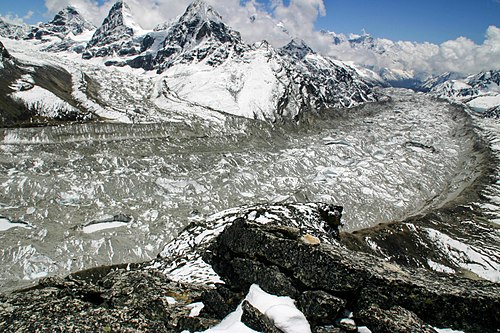
Nepal is set to receive a grant of nearly Rs 5 billion (USD 36.2 million) from the Green Climate Fund (GCF) to safeguard vulnerable communities from glacial lake outburst floods (GLOFs), which are increasingly threatening the Himalayan region due to climate change. The announcement was made during the 42nd GCF Board Meeting currently taking place in Papua New Guinea.

The assistance will be implemented through the United Nations Development Programme (UNDP), an accredited GCF entity. With an additional Rs 2 billion (USD 14 million) in co-financing from the Government of Nepal, UNDP, the Independent Power Producers’ Association of Nepal (IPPAN), local governments, and various ministries, the total project value stands at approximately Rs 7 billion.
The project, which will span seven years, will be led by Nepal’s Department of Hydrology and Meteorology in collaboration with UNDP Nepal. It aims to reduce the risk of physical damage from GLOFs, enhance livelihood security, and increase protection for communities living downstream, especially in the Koshi and Gandaki river basins. These regions are home to around 2.3 million people who are highly vulnerable to climate-induced disasters.
The initiative builds on Nepal’s previous success in managing glacial risks, such as the controlled drainage of Imja Lake, where the water level was lowered by 3.4 meters, helping avert a potential disaster. Under this new project, water levels of four high-risk glacial lakes will be reduced, and early warning systems will be expanded in at-risk regions. Additionally, more than 150 hectares of flood-prone riverside areas will be stabilized through nature-based solutions like tree planting. The project also includes training programs, improved disaster preparedness, and efforts to strengthen local climate adaptation capacities.
This grant approval comes at a critical moment, as the United Nations has declared 2025 the International Year of Glacier Preservation. UNDP Nepal has described the project as both an urgent necessity and a forward-looking intervention that combines science-based solutions with global solidarity.
Out of nearly USD 1.3 billion worth of climate project proposals under discussion at the GCF meeting, Nepal’s project stands out for its direct impact on vulnerable Himalayan communities and its emphasis on disaster risk reduction, climate resilience, and environmental conservation.