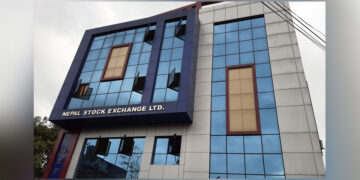


Bank and financial institutions (BFIs) in Nepal have increased their credit flow to the private sector by NPR 407.62 billion in the first 11 months of the fiscal year 2081/82, representing an 8% growth compared to the same period last year, according to the Nepal Rastra Bank (NRB).

In the same period last year, private sector lending had grown by NPR 246.80 billion, or 5.1%. On a year-on-year basis, as of the end of Jestha 2082, private sector credit expanded by 8.7%.
Within this credit distribution:
- 63.0% of loans were issued to non-financial institutional sectors, and
- 37.0% went to individuals and households.
This reflects a slight shift from last year’s proportions of 63.5% and 36.5%, respectively.
Breakdown by institution type shows:
- Commercial banks increased their private sector lending by 8.4%,
- Development banks by 4.7%, and
- Finance companies by 6.9%.
Regarding loan collateral:
- 14.5% of outstanding loans are secured by current assets (such as agricultural and non-agricultural goods), while
- 65.0% are backed by real estate mortgages.
Last year, these shares were 12.0% and 68.5%, respectively.
By sector, loan growth in the review period is as follows:
- Industrial production: +8.2%
- Construction: +12.9%
- Wholesale and retail trade: +5.2%
- Transport, communication, and public services: +13.5%
- Service industries: +8.8%
- Consumption sector: +10.9%
These figures reflect moderate recovery and growing credit demand across key sectors of the economy in the post-pandemic period.