

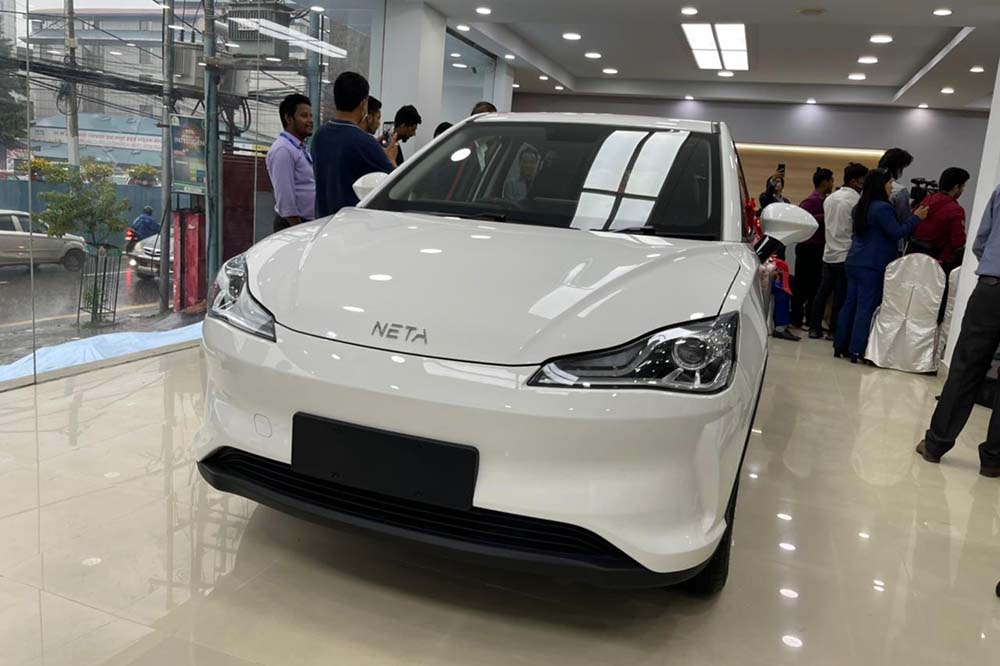
The price of electric vehicles (EVs) is set to increase significantly after the government introduced a new taxation framework through the budget for the upcoming fiscal year. Industry stakeholders estimate that prices of high-end EVs could rise by more than Rs 4 million, while entry-level models may become around Rs 100,000 more expensive.
Through the new Finance Bill, the government has replaced the existing system of taxing EVs based on the motor’s peak power with a valuation-based taxation system. Previously, customs duty, excise duty, road construction fee, and value-added tax (VAT) were calculated according to the motor’s peak power. The government argues that the change was necessary due to growing disputes and inconsistencies regarding the declaration and verification of peak power ratings.
Under the revised tax structure, all electric cars will now be subject to a uniform customs duty of 20 percent. Previously, customs duty varied between 15 percent and 80 percent depending on the vehicle’s motor capacity.
The government has also abolished the existing excise duty and introduced a new “Clean Infrastructure Investment Duty,” which will be levied based on the customs value of the vehicle.
According to the new provisions, EVs with a customs value of up to Rs 2 million will be subject to a 2.5 percent clean infrastructure investment duty. Vehicles valued between Rs 2 million and Rs 3 million will face a 20 percent duty, while those priced between Rs 3 million and Rs 4 million will be taxed at 35 percent.
The tax burden rises sharply for higher-priced vehicles. EVs valued between Rs 4 million and Rs 5 million will attract a 90 percent clean infrastructure investment duty, while those worth more than Rs 5 million will be charged up to 130 percent.
In addition, the government has retained the existing five percent road construction duty and 13 percent VAT on all electric vehicles.
Entrepreneurs and EV dealers warn that the new tax regime will substantially increase vehicle prices, potentially affecting consumer demand and slowing the growth of Nepal’s electric mobility sector. While lower-priced EVs are expected to see a modest price increase, premium and long-range models are likely to become significantly more expensive under the new taxation framework.