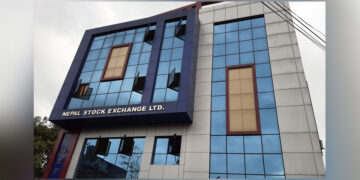


A comprehensive study by Nepal Rastra Bank (NRB) has uncovered significant discrepancies in the financial health of several institutions, whose stock prices were artificially inflated.

The NRB’s investigation into Pokhara Finance, Narayani Development Bank, and Janaki Finance revealed severe financial challenges. For instance, while Pokhara Finance reported bad loans at 14.44% in its first-quarter statement, the NRB found the actual figure to be 41.07%, alongside a negative capital adequacy ratio. This led the central bank to implement immediate corrective measures.
Similarly, Narayani Development Bank reported bad debt at 34.81% and a capital adequacy ratio of 4.58%. However, the NRB discovered even worse numbers, with bad loans at 42.53%. Janaki Finance also understated its bad loans, reporting 34.64%, while the NRB found them to be 38.44%.
Despite these alarming findings, the stock prices of these institutions showed unusual movements. Pokhara Finance’s shares rose by Rs 7 to Rs 529, and Narayani Development Bank’s increased significantly by Rs 87 to Rs 1,075. Meanwhile, Janaki Finance experienced a slight decline of 3.53%, with its share price settling at Rs 670.50.
In response, the NRB has enforced corrective measures as per its regulatory guidelines. These include restrictions on dividend distribution, salary increments, and business expansion for the affected institutions. The central bank is also authorized to set deadlines for these institutions to improve their capital adequacy ratios.
This intervention mirrors a prior situation involving Karnali Development Bank, which faced severe financial instability, prompting similar action by the NRB. Under existing laws, the NRB can mandate mergers and acquisitions, revoke operating licenses, or initiate liquidation if an institution fails to meet the prescribed financial benchmarks, including the minimum capital adequacy ratio, within the stipulated time frame.