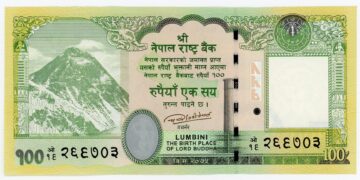


Nepal’s economy is receiving a significant boost from its overseas workforce, with remittance inflows growing robustly and contributing to strong external sector metrics, according to the latest Nepal Rastra Bank (NRB) report covering the first four months of the fiscal year 2025/26.

Sharp Rise in Remittances
Remittances surged by 31.4% to Rs. 687.13 billion compared to the same period last year, a major acceleration from the 9.4% growth previously recorded. In US dollar terms, inflows rose 25.3% to $4.88 billion. For the single month of mid-October to mid-November (Kartik), remittances reached Rs. 133.82 billion.
Sustained Worker Outflow
The demand for foreign employment remains high. In the review period, 145,973 Nepali workers received first-time approval for foreign employment, while 127,837 secured renewal approvals. This indicates continued reliance on overseas labor markets.
Improved External Balances
The substantial remittance flow has significantly strengthened the country’s external position:
- Current Account: Recorded a higher surplus of Rs. 279.65 billion (US $1.99 billion), up from Rs. 147.78 billion last year.
- Balance of Payments (BOP): Remained in a strong surplus of Rs. 318.40 billion.
- Foreign Exchange Reserves: Increased by 14.1% to Rs. 3,055.52 billion (US $21.52 billion) as of mid-November 2025, providing a robust buffer for the national economy.
Persistent Low Inflation
Concurrently, the report confirms a period of notable price stability. The year-on-year consumer price inflation stood at 1.11% in mid-November 2025, a sharp drop from 5.60% a year ago. The average inflation for the first four months of the fiscal year was 1.53%. This low inflation environment is primarily attributed to a 3.32% decrease in food and beverage prices, despite non-food and service inflation remaining at 3.69%.
Regional Price Variations
Inflation rates varied across provinces, with Koshi (1.80%) and Madhesh (1.73%) experiencing the highest rates, while Gandaki (0.37%) and Sudurpashchim (0.26%) recorded the lowest.
Overall, the data paints a picture of an economy being fueled by strong remittance inflows, leading to healthier foreign reserves and external balances, all within a context of subdued inflationary pressure.