
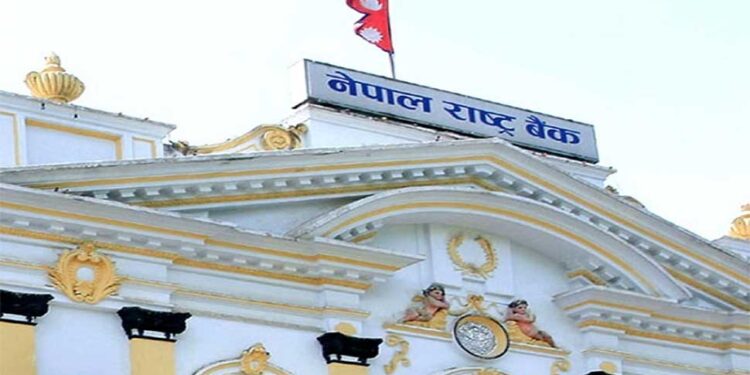
Growing economic and policy uncertainty is slowing Nepal’s economy by weakening investment, credit expansion and market confidence, according to a new study by Nepal Rastra Bank (NRB).
Published as NRB Working Paper No. 65, The Aggregate Impact of Economic Policy Uncertainty: Evidence from Nepal, the study introduces Nepal’s first Google Trends Uncertainty Index (GUI), developed using internet searches related to economic, monetary and trade policies since 2011.
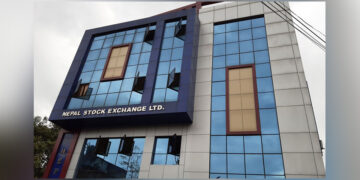
The research, conducted by NRB economists Birendra Bahadur Budha, Rohan Byanjankar and Swastik Nepal, found that rising policy uncertainty negatively affects key economic indicators, including gross domestic product (GDP), imports, private sector lending and the Nepal Stock Exchange (NEPSE) index. The central bank clarified that the findings represent the authors’ research and not the NRB’s official position.
The study shows uncertainty typically increases around the annual federal budget, monetary policy announcements, major political developments, international summits and periods of external economic stress. Notable spikes were recorded during the 2014 SAARC Summit, the 2018 BIMSTEC Summit and Nepal’s foreign exchange reserve crisis in 2022.
According to the report, a one-standard-deviation rise in policy uncertainty could reduce GDP by around 2 percent, imports by 15 percent, and private sector credit by up to 5 percent. The economic impact generally begins in the second quarter and becomes most pronounced in the third quarter, highlighting the importance of stable and predictable economic policies for sustaining growth.